


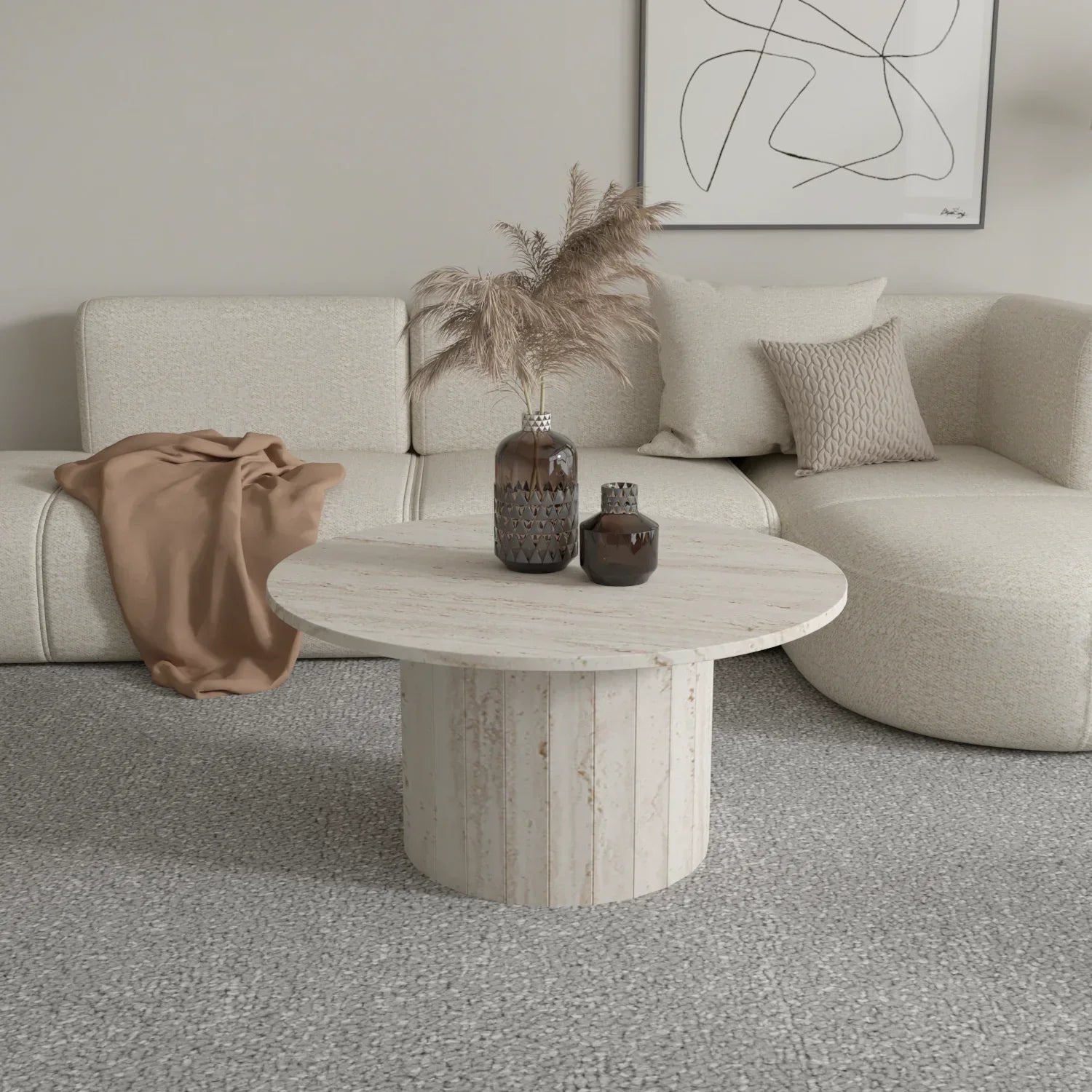
A stone coffee table can be practical, but only if you understand what natural stone is good at and what it asks of you. It is strong, solid and visually calm. It is also heavy, porous in some materials, and not something to drag around the room on a whim.
For the right home, a stone coffee table is a serious piece of furniture. It gives the sitting area a centre. It does not wobble, feel temporary or need replacing because a trend has moved on.
The Short Answer
Yes, stone coffee tables are practical for many homes. They are durable, stable and easy to live with when sealed and cared for properly.
They are less practical if you want lightweight furniture, move things often, or expect every surface to behave like laminate. Natural stone needs simple care: wipe spills quickly, use coasters, avoid harsh cleaners and respect the weight of the piece.
The Pros of a Stone Coffee Table
A stone coffee table brings weight, permanence and natural character to a room. It sits firmly in place and gives the seating area a clear centre.
Stone also has depth that manufactured surfaces cannot copy. Travertine has pores, bands and soft tonal movement. Marble has veining and a cooler surface character. Granite feels denser and harder wearing.
Pieces such as the Aventino Round Travertine Coffee Table and Duomo Marble & Wood Coffee Table show how different the material can feel depending on shape, stone and construction.
For the full range, view our stone coffee tables.
The Cons to Think About
The main drawback is weight. A stone coffee table is not easy to lift, shift or reposition. Delivery and placement need proper care.
Some stones can also stain or etch if spills are left on the surface. Travertine and marble should be sealed, but sealant is protection, not armour. Wine, coffee, oil, citrus and strong cleaning products should be handled carefully.
Stone can also chip if struck hard on an edge. It is strong, but not careless-proof.
Weight and Everyday Use
Weight is part of the appeal. It gives the table presence and stability. You are unlikely to knock it out of place during daily use.
But weight also means you should plan where the table will sit. Think about sofa spacing, walkways, rug placement and access before it arrives. Once a stone table is in position, it is best left there.
This is why proportion matters. A well-sized stone coffee table should feel generous without blocking the room.
Cleaning and Care
Day-to-day care is simple. Use a soft cloth, warm water and a pH-neutral cleaner suitable for natural stone. Dry the surface after cleaning.
Avoid vinegar, lemon, bleach, abrasive pads and strong household sprays. These can damage the finish or mark the stone.
Use coasters for drinks, especially wine, coffee and anything acidic. Use trays or felt pads under decorative objects if they are rough underneath.
Are Travertine Coffee Tables Practical?
Travertine coffee tables are practical if you like natural texture and are happy with simple care. Travertine is visually forgiving because its pores, bands and tonal variation can sit comfortably alongside everyday use.
It is a good choice for relaxed living rooms, neutral interiors and spaces where the table should feel warm rather than polished. For examples, view our travertine coffee tables.
Which Homes Suit Stone Coffee Tables?
Stone coffee tables work best in homes where furniture is chosen slowly and kept for years. They suit living rooms with proper space around the seating area, calmer interiors and people who value natural materials.
They may be less suited to homes where furniture is moved constantly, young children use the coffee table as play equipment, or the surface is likely to be treated roughly every day.
That does not make stone impractical. It just means it should be chosen with intent.


