


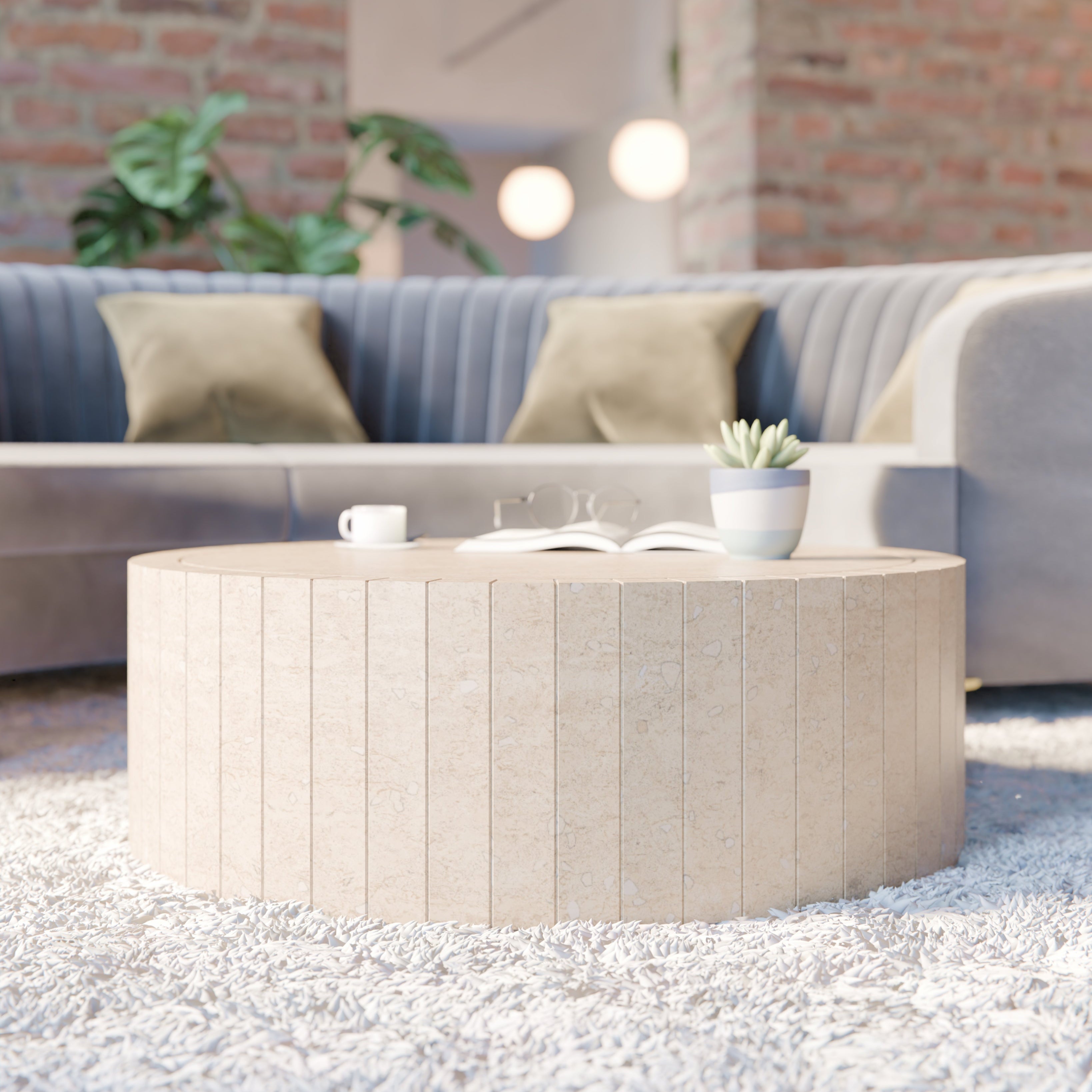
How to clean a travertine table comes down to one simple rule: treat it like natural stone, not a standard household surface. Travertine is strong, beautiful and made for use, but it is still porous. It needs the right cleaner, sensible daily care and a good seal.
So, does travertine stain? It can, if spills are left to sit or the wrong products are used. With prompt cleaning and proper sealing, a travertine table can be lived with confidently.
The Short Answer
Clean a travertine table with a soft cloth, warm water and a pH-neutral cleaner made for natural stone. Wipe spills quickly. Avoid vinegar, lemon, bleach, abrasive pads and harsh household sprays.
Sealing helps protect the surface, but it does not make travertine indestructible. Think of it as useful protection, not a licence to leave wine, oil, coffee or acidic foods on the table.
What Makes Travertine Different?
Travertine is a natural limestone with visible pores, soft movement and tonal variation. Those pores are part of its character. They are also the reason care matters.
A travertine table is not meant to look factory-perfect. The surface may have natural pits, filled areas, bands and small variations from piece to piece. This is what gives furniture such as the Aventino Round Travertine Coffee Table and Ravenna Oval Travertine Dining Table its depth and material presence.
For more pieces in this stone, view our travertine coffee tables and travertine dining tables.
How to Clean a Travertine Table Day to Day
Use a soft cloth or microfibre cloth for daily wiping. For light marks, warm water is often enough. For a deeper clean, use a pH-neutral stone cleaner.
Dry the surface after cleaning. Do not leave standing water on the table, especially around edges, joins or natural pores.
A simple routine works best:
- Wipe crumbs and dust away with a soft dry cloth
- Clean with warm water or pH-neutral stone cleaner
- Remove spills as soon as they happen
- Dry the surface with a clean cloth
- Use coasters, placemats and trivets where sensible
What Not to Use on Travertine
Do not use acidic cleaners on travertine. That includes vinegar, lemon juice and many bathroom or kitchen sprays. Acid can dull or etch the surface.
Avoid bleach, abrasive powders, wire wool, rough scouring pads and steam cleaners. These can damage the finish or weaken the protection of the seal.
Travertine does not need aggressive cleaning. It needs gentle, regular care.
Does Travertine Stain?
Travertine can stain because it is porous. Oil, red wine, coffee, tea, sauces and strongly coloured liquids are the main risks. Acidic spills can also leave dull marks if they are left too long.
This does not mean travertine is unsuitable for tables. It simply means it should be used with care. Most natural materials need the same kind of respect: wood can mark, marble can etch, and stone can stain if neglected.
The best protection is quick action. Blot spills rather than rubbing them across the surface. Clean with a suitable stone cleaner, then dry the table.
How Sealing Helps
Sealing helps reduce the rate at which liquid can enter the stone. It gives you more time to clean a spill before it becomes a problem.
The right seal will depend on the travertine, finish and intended use. A dining table may need different consideration from a side table or coffee table. Always follow the advice given for your specific piece.
A sealed travertine table still needs coasters, placemats and sensible cleaning. Sealant supports care. It does not replace it.
When to Reseal a Travertine Table
Resealing depends on use, finish and the sealant applied. A table used every day for meals may need attention sooner than a side table used occasionally.
A simple water test can help indicate whether protection is still working. Place a small amount of clean water on an inconspicuous area. If the water darkens the stone quickly or soaks in rather than sitting on the surface, the table may need resealing.
Use this as a guide only. For a handmade table, it is better to confirm the right product and process before applying anything.
Which Travertine Tables Need the Most Care?
Dining tables usually need the most day-to-day care because they deal with food, drink, heat and regular cleaning. Coffee tables also see a lot of use, especially from mugs, glasses, books, candles and decorative objects.
Side tables tend to have lighter use, but they should still be protected from water rings, oils and sharp objects.
The rule is the same for all travertine furniture: clean gently, wipe spills quickly and avoid harsh products.


