


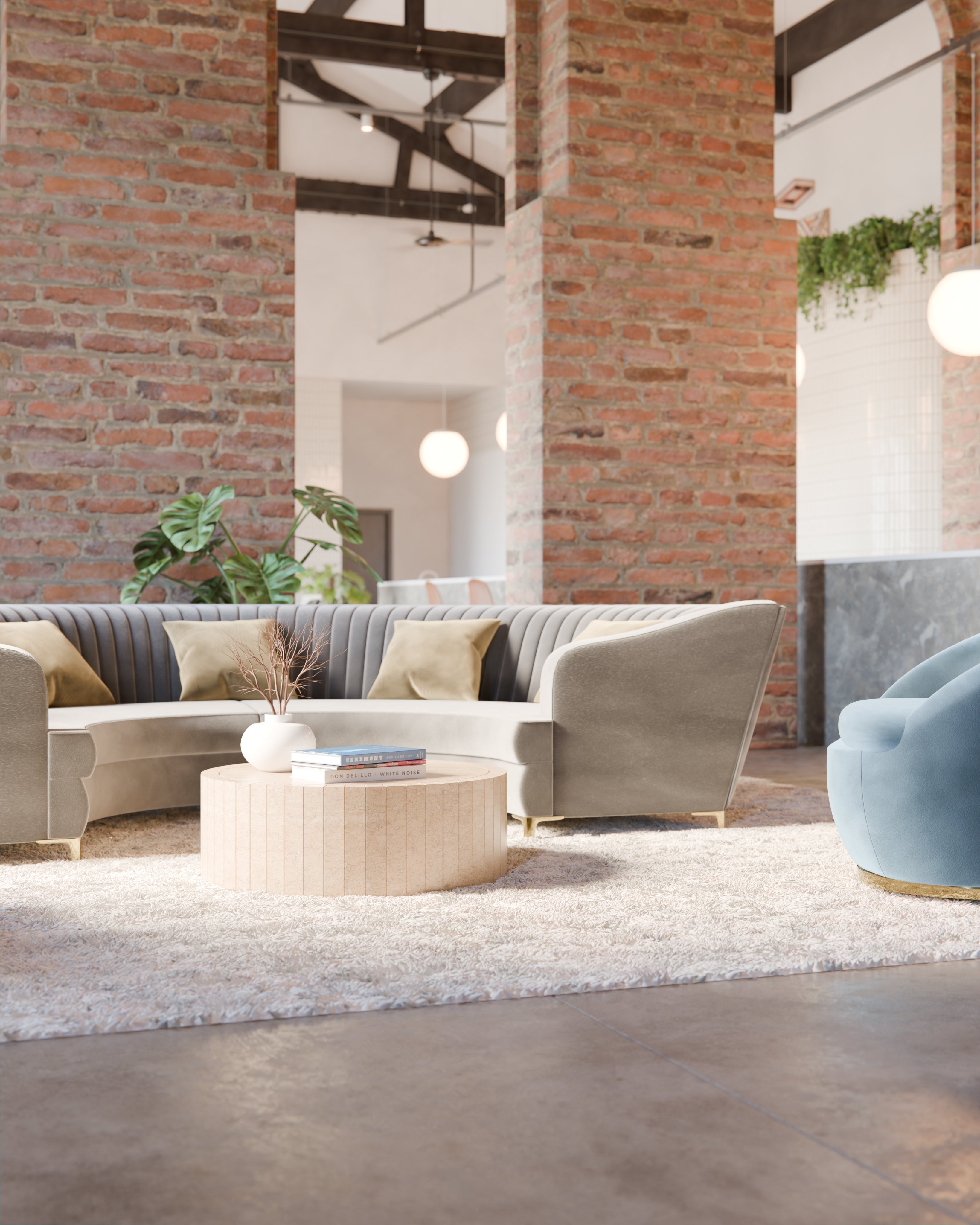
Travertine vs marble is not a question of good stone against bad stone. Both are natural materials. Both can make a serious table. The better choice depends on how you live, what kind of surface you like, and how much natural variation you want to see every day.
Travertine tends to feel warmer, softer and more architectural. Marble often feels cooler, smoother and more refined. For dining tables, coffee tables and side tables, the choice is usually about character first, then care.
The Short Answer
Choose travertine if you want a warmer, more textured table with visible pores, softer movement and a grounded, ancient feel. It suits relaxed dining rooms, calm living spaces and interiors where the stone should feel substantial but not polished to perfection.
Choose marble if you want stronger veining, a smoother surface and a cooler, more formal look. Marble suits rooms where the table is expected to feel sharper, cleaner and more decorative.
For most homes, neither material should be treated like a plastic laminate or factory-made surface. Both deserve simple care. Use coasters, wipe spills promptly and choose a suitable finish and seal.
What Is Travertine?
Travertine is a type of limestone formed by mineral deposits, often around hot springs. It is known for its open pores, warm tones and banded movement. Many people recognise it from Roman architecture, flooring and stone interiors.
As furniture, travertine has a solid, earthy quality. It does not feel glossy or precious by default. It feels grounded. That is why it works well for dining tables, coffee tables and side tables that need presence without looking overworked.
Virrelli uses travertine across pieces such as the Ravenna Oval Travertine Dining Table and the Navona Travertine Side Table. For the wider material range, view our travertine furniture.
What Is Marble?
Marble is a metamorphic stone formed when limestone is changed by heat and pressure. It is known for its veining, smoother surface and wide range of colours, from pale whites and creams to darker, more dramatic stones.
As a table material, marble usually feels more formal than travertine. It can look crisp, graphic and refined, especially when the veining is strong. It often suits cleaner interiors, darker woods, metal details and rooms where the table is meant to feel more composed.
For pieces using this material, explore our marble furniture, including designs such as the Duomo Marble & Wood Coffee Table.
Durability Compared
Both travertine and marble are real stone, but neither is indestructible. They are strong materials, yet they can mark, chip or stain if treated carelessly.
Travertine is often slightly more textured and forgiving in appearance. Small signs of use can sit more naturally within its pores and tonal variation. Marble can show marks more clearly, especially on paler stones with a smooth finish.
For dining, the base design, stone thickness, finish and sealing matter as much as the stone type. A well-made stone table should feel stable and properly supported. This is why handmade construction matters.
| Feature | Travertine | Marble |
|---|---|---|
| General feel | Warm, textured, architectural | Cool, smooth, refined |
| Surface character | Open pores, tonal bands, softer movement | Veining, clearer contrast, smoother movement |
| Day-to-day tolerance | Visually forgiving, still needs care | Durable, but marks can show more clearly |
| Best suited to | Relaxed dining, natural interiors, grounded rooms | Cleaner interiors, sharper schemes, formal rooms |
| Care level | Moderate | Moderate to high, depending on finish |
Staining and Sealing
Both stones are porous to some degree. That means sealing matters.
A sealed travertine table is better protected against everyday spills, but it should still be wiped promptly. Wine, coffee, oil, citrus and strong coloured sauces should not be left sitting on the surface.
Marble also needs sealing and sensible use. Acidic liquids can etch marble, leaving dull marks on the surface. Lemon juice, vinegar and some cleaning products are common culprits. This does not mean marble is unsuitable for tables. It means it should be used with care.
For either stone, avoid harsh cleaners. Use a soft cloth and a pH-neutral cleaner suitable for natural stone.
Appearance and Character
Travertine has a quieter, more mineral character. Its beauty is in the pores, bands and soft shifts in colour. It often works well with plaster, oak, linen, bronze, warm neutrals and natural textures.
Marble is usually more defined. Veining can be subtle or bold, depending on the slab. It can bring more contrast to a room, especially when paired with dark timber, black accents or clean architectural lines.
This is the simplest way to think about it: travertine tends to calm a room down. Marble tends to sharpen it.
Price
Price depends on the stone, table size, construction, finish, wastage, transport and installation requirements. A small travertine side table is not comparable to a large marble dining table.
In general, rare marbles and complex marble slabs can become more expensive quickly. Travertine is often more accessible, but large, high-quality travertine pieces still require serious craft and handling.
The cost should be judged against the finished object, not just the material name. A natural stone table is heavy, made slowly and built around a material that cannot be rushed.
Which Should You Choose?
Choose travertine if you want warmth, texture and a table that feels grounded. It is especially strong for dining spaces where you want natural stone without a cold or overly formal mood. View our travertine dining tables for examples.
Choose marble if you want a smoother, more composed surface with stronger veining and a cleaner finish. It is a good choice when the table needs to feel more refined or graphic within the room.
You can also think by table type. Travertine works beautifully for large dining tables, pedestal forms, coffee tables and side tables. Marble works well where veining and contrast are part of the design, especially in coffee tables and selected dining pieces.
For the full dining range, including natural stone pieces across materials, view our stone dining tables.


