


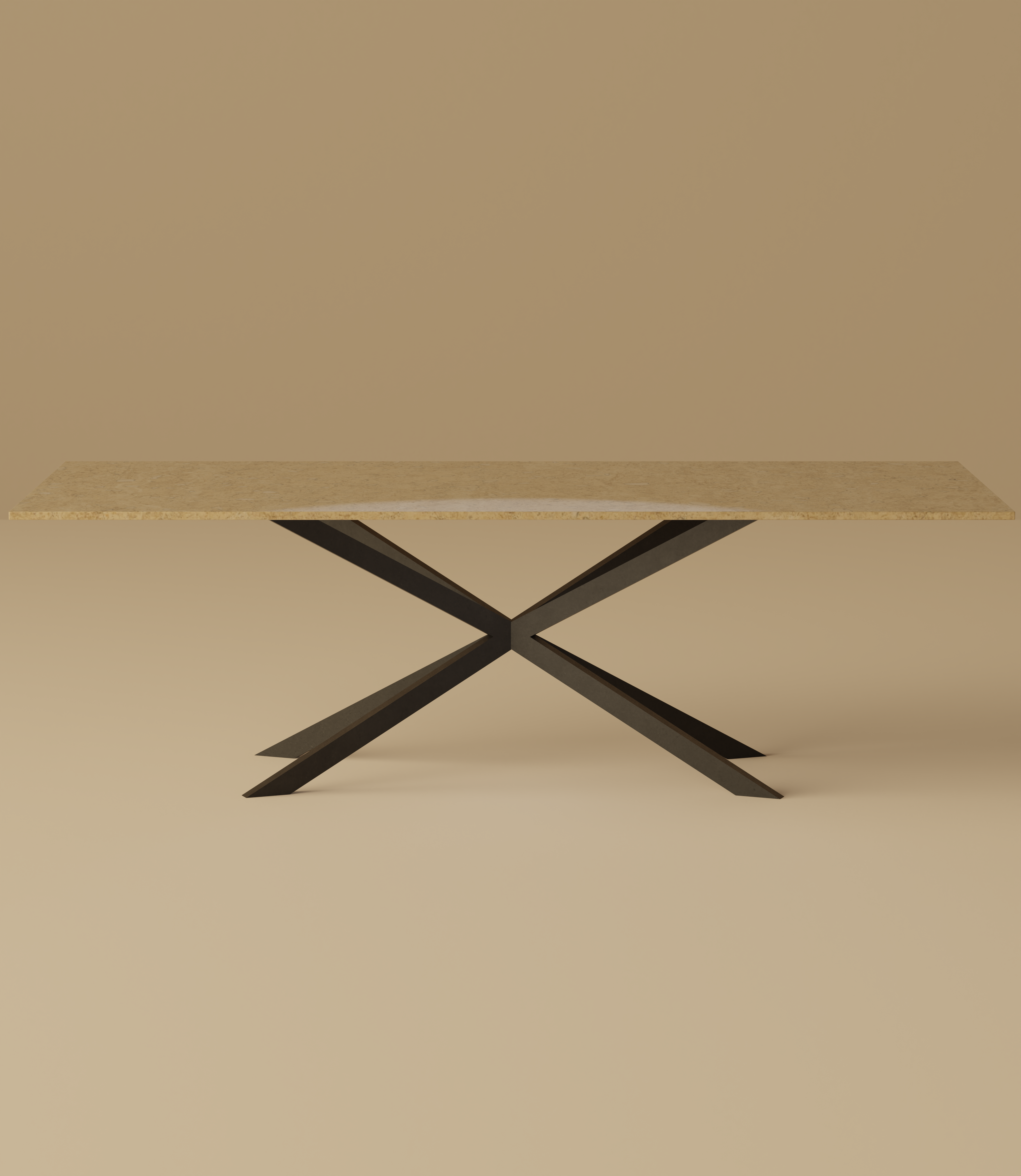
A marble dining table is a serious piece of furniture. It brings natural veining, weight and surface character into the room, but it also needs the right size, finish, base and care habits.
This buying guide explains what to consider before choosing one. Marble is not a printed pattern or a lightweight surface. It is natural stone, and the best tables are designed around the material rather than simply made to look impressive in photographs.
Explore our stone dining tables and marble dining tables to compare natural stone dining pieces when the marble dining collection is live.
The Short Answer
Choose a marble dining table if you want a natural stone table with visible veining, surface depth and a more refined character than many warmer stones.
Before buying, think about:
- Table size
- Room clearance
- Stone selection
- Veining and colour
- Finish
- Sealing
- Base design
- Weight and delivery
- Day-to-day care
- Whether bespoke sizing is needed
A good marble dining table should suit the room when empty, work properly during meals and feel balanced with the chairs, lighting and surrounding materials.
Why Choose a Marble Dining Table?
Marble has a different character from travertine, granite, timber or engineered surfaces. It is cool, veined and naturally varied. Some slabs are quiet and pale. Others are stronger, darker or more graphic.
This makes marble useful when the dining table needs to become the main material focus of the room. It does not need heavy styling. The stone already carries movement.
A marble dining table can work well in formal dining rooms, open-plan kitchens, larger living spaces and calm contemporary interiors. It pairs especially well with timber, linen, wool, leather, bronze, plaster, darker accents and soft architectural lighting.
Marble Is Natural Stone, Not Marble Effect
A real marble dining table is made from natural stone. The veining belongs to the slab itself. It is not printed onto the surface.
This matters because many tables are sold as marble effect, marble look or marble style. Those can be useful in some settings, but they are not the same as solid natural stone.
Real marble has depth, weight and variation. The edge, surface and movement are all part of the material. A marble-effect table may copy the appearance, but it will not have the same presence or individuality.
If the dining table is intended to be a long-term piece, real marble or another solid natural stone will usually feel more convincing.
Choose the Right Size First
Size should come before stone choice.
A marble dining table that is too large will dominate the room and make chairs awkward to use. A table that is too small may look lost, especially because stone has visual weight.
Start by measuring the room. Then allow enough clearance around the table for chairs to pull out and people to move. Where possible, leave around 90cm of space around the table. More is better in busy rooms or open-plan kitchens.
Think about daily use first. A table should work for the number of people who use it most often, not only for rare occasions.
For more detailed measurements, read our stone dining table size guide.
Choose the Right Shape
Marble can work in round, oval and rectangular dining tables, but each shape changes the room.
A round marble dining table feels sociable and balanced. It works well in square rooms and spaces where conversation matters. Everyone faces towards the centre, and there are no hard corners.
An oval marble dining table gives more length while keeping a softer outline. It can suit longer rooms and open-plan spaces where a rectangular table might feel too rigid.
A rectangular marble dining table feels more formal and architectural. It suits larger rooms, straight chair layouts and dining spaces with strong lines.
The best shape depends on the room, the number of seats and the way people move around the table.
Think About the Marble Itself
Not all marble looks the same.
Some marble is pale and quiet. Some has strong grey, brown, gold or black veining. Some slabs have large open areas. Others have dense movement throughout.
The stone should suit the size and shape of the table. A very busy slab may be too much for a large dining table in a small room. A very quiet slab may feel too plain if the table is meant to be the main feature.
The Palatino Marble & Travertine Dining Table shows how natural stone choice affects the whole dining piece. Marble gives the table a refined surface character, while travertine offers a warmer alternative where the room needs less contrast.
Veining and Pattern
Veining is one of the main reasons people choose marble.
Strong veining can make the table a clear focal point. Softer veining can feel calmer and easier to live with. Directional veining can make a table feel longer or more architectural, while cloudier movement can feel more relaxed.
Look at how the veining will sit on the finished table. The pattern should feel balanced across the surface, not awkwardly cut or placed.
For a large dining table, slab selection matters more than it does for smaller furniture. The surface is seen every day and from several angles. The stone should feel considered.
Honed or Polished Marble?
The finish changes how the marble looks and behaves.
A honed marble dining table has a smoother, lower-sheen surface. It feels calmer, softer and often more contemporary. It can also be more forgiving visually because it does not rely on high reflection.
A polished marble dining table has more shine and stronger surface reflection. It can make veining look sharper and colour appear deeper. The trade-off is that scratches, dull patches and etching may be more visible.
For everyday dining, honed marble is often the more liveable choice. Polished marble can work in more formal rooms, but it needs careful use.
For a fuller explanation, read our honed vs polished stone finishes.
Does Marble Stain or Etch?
Marble can stain, and it can etch. These are different things.
A stain happens when something soaks into the stone and changes its colour. Oil, wine, coffee and strongly coloured liquids can cause staining if left too long.
Etching happens when acid reacts with the marble surface. Lemon, vinegar, wine, fruit juice and some cleaning products can leave dull marks.
Sealing helps protect marble from staining. It does not fully prevent acid etching. This is why care habits matter, especially on a dining table used for food and drink.
Sealing a Marble Dining Table
A marble dining table should usually be sealed to help protect the stone.
The right seal depends on the marble, finish and intended use. A dining table needs more protection than a decorative surface because it is exposed to meals, drinks, cleaning and daily contact.
Sealing gives you more time to clean spills before they enter the stone. It does not make the table impossible to mark.
A sealed marble table should still be treated carefully. Use placemats, wipe spills promptly and avoid harsh cleaners.
Base Design and Support
The base of a marble dining table is not just decorative. It has to support the stone properly.
Marble is heavy. The base needs to be stable, proportioned and suited to the shape of the top. A table can look good in a photograph but still feel wrong if the base restricts chairs, makes the table unstable or does not suit the weight of the stone.
Pedestal bases can be useful because they leave more flexibility around the edge. Four-leg designs can feel more traditional and structured. Sculptural bases can work well, but they need to be designed around both appearance and function.
With any stone dining table, support should be part of the design from the start.
Marble Dining Tables and Chairs
Chairs can make or break a marble dining table.
Very delicate chairs may feel too light beside a substantial stone top. Very heavy chairs may make the whole room feel too hard. The best choice often sits between the two.
Marble works well with timber chairs, upholstered dining chairs, leather seats, bronze frames and darker accents. It can also sit with softer fabrics and warm lighting to stop the room feeling cold.
Chair height and width matter too. Make sure the chairs tuck in comfortably, leave enough elbow room and work with the table base.
Marble in Open-Plan Dining Spaces
Marble can work especially well in open-plan spaces because it creates a clear dining zone.
In a kitchen-living-dining room, the table often needs to hold its own between several areas. Marble gives the dining space a stronger centre without needing extra decoration.
The key is material balance. If the kitchen already has stone worktops, the marble dining table should either relate to them calmly or provide deliberate contrast. If the living area is softer, use chairs, lighting and rugs to connect the table back to the rest of the room.
Avoid making every hard surface compete. One strong stone statement is usually enough.
Marble vs Travertine for Dining Tables
Marble and travertine are both natural stones, but they create different dining rooms.
Marble is usually cooler, smoother and more visibly veined. It often feels more refined and formal.
Travertine is warmer, more textured and more architectural. It tends to feel calmer and more relaxed.
Neither is simply better. Marble suits rooms where the table should bring veining and contrast. Travertine suits rooms where warmth and texture matter more.
Explore our travertine dining tables if you are comparing marble with a warmer natural stone option.
Marble vs Granite for Dining Tables
Granite is generally denser and harder in feel than marble. It often has a more mineral or speckled surface, while marble has veining and softer movement.
A granite dining table can feel more architectural and hard-wearing. A marble dining table can feel more refined and visually expressive.
The choice depends on the room and how the table will be used. If you want stronger veining and a more composed dining surface, marble is usually the better fit. If you want density and a more grounded material character, granite may suit the space.
Delivery and Access
Marble dining tables are heavy, so delivery should be considered before ordering.
Check doorways, stairs, tight turns, lifts, parking access and the route into the dining room. Large stone tables need careful handling and proper placement.
This is especially important for flats, townhouses, older properties and rooms with narrow access.
A marble dining table should not be dragged into place or moved casually after delivery. The planning is part of owning a serious stone piece.
Bespoke Marble Dining Tables
Bespoke sizing may be useful when standard dimensions do not suit the room.
A bespoke marble dining table may involve a different size, stone, finish, edge detail or base. The benefit is that the table can be planned around the room, seating and intended use.
The cost will usually be higher than a standard design because more planning, stone selection and making time are involved.
For custom projects, view our bespoke stone furniture page.
How to Care for a Marble Dining Table
Use a soft cloth, warm water and a pH-neutral cleaner suitable for natural stone. Dry the surface after cleaning.
Avoid vinegar, lemon, bleach, abrasive pads, limescale remover and harsh household sprays. These can damage the finish or etch the stone.
Use placemats for meals and coasters for drinks. Wipe wine, coffee, oil and acidic spills promptly. Use felt pads under objects with rough bases.
A marble dining table should be used and enjoyed, but it should not be neglected.
Common Buying Mistakes
The first mistake is choosing by photograph alone. Marble needs to be considered in relation to the room, not just the image.
The second mistake is ignoring size. A stone dining table needs space around it because the material has visual weight.
The third mistake is choosing the wrong finish. A polished finish may look impressive at first, but honed marble may be easier to live with.
The fourth mistake is treating marble like an engineered surface. Marble is natural stone. It needs proper care and sensible habits.
The final mistake is not thinking about delivery. Access should be checked before the table is made or ordered.
Questions to Ask Before Buying
Before choosing a marble dining table, ask:
- Is it solid natural marble?
- What finish does it have?
- Is the stone sealed?
- How large should the table be?
- How many people will use it daily?
- Does the shape suit the room?
- Will the base restrict the chairs?
- What care does the marble need?
- Can it be made bespoke?
- Is delivery and placement planned?
- Will the table suit the room when empty?
Good answers to these questions make the buying decision much clearer.
Marble Dining Table FAQs
Is marble good for a dining table?
Yes. Marble can be a good dining table material when it is properly finished, sealed and cared for. It offers natural veining, depth and a refined surface character.
Does a marble dining table stain?
Marble can stain if liquids are left on the surface, especially oil, wine, coffee and strongly coloured spills. Sealing helps reduce the risk, but spills should still be wiped promptly.
Does marble etch?
Yes. Marble can etch when exposed to acidic substances such as lemon, vinegar, wine, fruit juice and some cleaning products. Etching creates dull marks on the surface.
Is honed or polished marble better for a dining table?
Honed marble is often more liveable because it has less shine and can be more forgiving visually. Polished marble gives stronger reflection and veining, but dull marks and etching may show more clearly.
What size marble dining table should I buy?
Choose a size based on the room and daily seating needs. Leave enough clearance around the table for chairs and movement. Do not choose a large table only for rare occasions if it will overwhelm the room every day.
Is marble better than travertine for dining tables?
Marble is better if you want veining and a more refined surface. Travertine is better if you want warmth, texture and a calmer architectural feel. Both can work well when properly finished and cared for.
Are marble dining tables heavy?
Yes. Marble dining tables are heavy, so delivery, access and placement need planning. Large tables should be handled carefully and positioned properly.
Can a marble dining table be made bespoke?
Yes. Bespoke marble dining tables may be possible depending on the stone, design and construction. Size, finish, base and edge details can be considered around the room and use.


