


The Short Answer
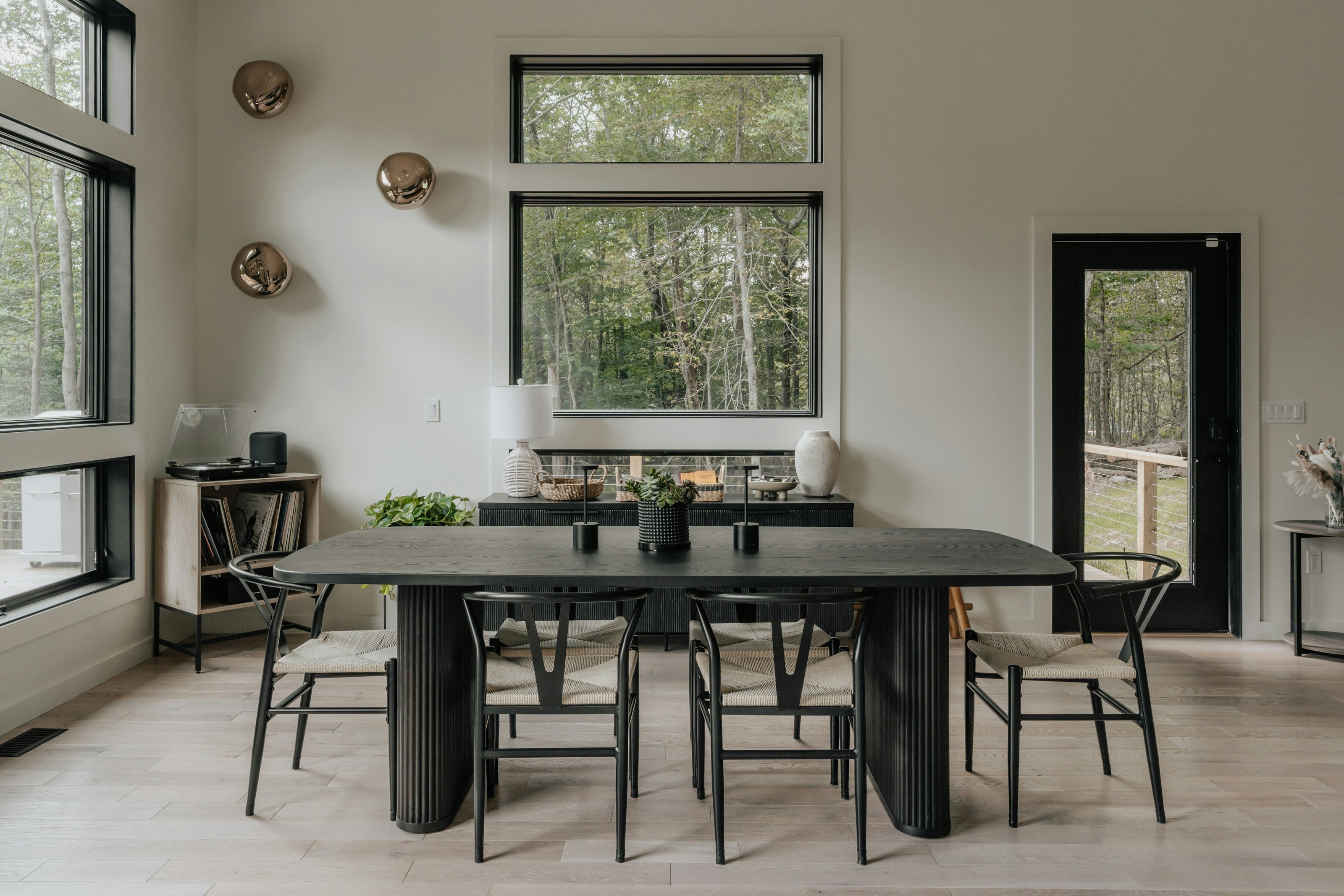
Choose chairs that balance the visual weight of the stone table.
For travertine, timber, linen, leather, woven seats and soft neutrals work well. For marble, upholstered chairs, darker timber, bronze, blackened metal and cleaner silhouettes can suit the surface. For granite, use chairs that soften the density of the stone, such as pale upholstery, textured fabric or warm timber.
The chairs do not need to match the table exactly. They need to feel proportioned, comfortable and natural in the room.
Start with Scale
Scale matters more than style.
A stone dining table has more visual weight than a lighter timber or veneer table. Very thin chairs can look too weak beside it. Very bulky chairs can make the whole room feel heavy.
The best chairs usually sit somewhere in the middle. They should have enough presence to hold their place around the table, but not so much that they compete with the stone.
Think about:
- Chair width
- Chair height
- Back height
- Seat depth
- Armrests
- Leg thickness
- Upholstery volume
- How many chairs the table needs to hold
A dining chair should look right when pushed in and feel comfortable when pulled out.
Match the Chair to the Table Shape
The shape of the table affects the chair choice.
A round stone dining table suits chairs with softer lines. Curved backs, rounded legs or gently upholstered seats can help the whole setting feel more relaxed.
An oval dining table can take slightly more structured chairs, but softer shapes still work well because the table already has a curved outline. The Ravenna Oval Travertine Dining Table is a good example. Its long form gives useful dining space, while the rounded ends keep the room feeling calm.
A rectangular stone table can take straighter, more architectural chairs. This works especially well in larger rooms, formal dining spaces or open-plan kitchens with strong lines.
For curved dining pieces, browse our oval tables.
Think About the Table Base
The base can affect how many chairs fit comfortably.
A pedestal base often gives more seating flexibility because there are no corner legs. Chairs can usually sit more freely around the edge, especially on round tables.
The Aventino Round Travertine Pedestal Dining Table is designed around this idea. The central base lets the seating feel open, while the travertine top gives the table weight and presence.
Four-leg tables can feel more traditional and structured, but the legs may restrict chair positions. This matters if you want to seat extra people occasionally.
View our pedestal dining tables for central-base dining designs.
Chairs for Travertine Dining Tables
Travertine has warmth, pores and soft natural movement. It usually works best with chairs that keep that warmth in the room.
Good choices include oak, walnut, leather, linen, woven seats and soft upholstered shapes. Travertine also works well with warm neutrals, cream, tan, taupe, tobacco, olive, charcoal and muted earthy tones.
Avoid chairs that feel too shiny or cold unless the room has enough softness elsewhere. Travertine is an architectural stone, but it should not feel severe in a dining space.
For material-specific pieces, explore our travertine dining tables.
Chairs for Marble Dining Tables
Marble has a cooler, more refined character. It often suits chairs that feel composed but not overly delicate.
Darker timber can give marble warmth. Upholstered chairs can soften the stone. Bronze or blackened metal can add structure without making the room feel too decorative.
If the marble has strong veining, keep the chairs quieter. Let the stone remain the main surface in the room. If the marble is calmer, the chairs can carry more texture, colour or shape.
The key is restraint. Marble does not need chairs that fight for attention.
Chairs for Granite Dining Tables
Granite is dense, mineral and often more visually grounded than marble or travertine.
To balance it, use chairs with warmth or softness. Upholstered seats, pale fabric, warm timber and rounded forms can stop the room feeling too hard.
Darker granite can look strong with lighter chairs. Paler granite can work well with richer timber or deeper upholstery. The aim is contrast without making the room feel busy.
Granite already brings weight, so the chairs should make the dining space feel liveable.
Upholstered or Timber Chairs?
Both can work.
Upholstered chairs add comfort and softness. They are useful when the stone table is large, formal or visually heavy. They also help absorb sound, which can make a dining room feel warmer.
Timber chairs bring natural texture and structure. Oak, walnut and darker woods all pair well with stone, depending on the material. Timber can stop marble feeling too cool and make travertine feel even more grounded.
A mix can also work. For example, upholstered end chairs with simpler timber side chairs can make a longer table feel less rigid.
Should Dining Chairs Have Arms?
Dining chairs with arms can be comfortable, but they need more space.
Armchairs usually take up more width and may not tuck fully under the table. This matters with stone tables because the base and top thickness may affect clearance.
Armchairs can work well at the ends of rectangular or oval tables. Around a round table, they need careful checking so the spacing does not feel crowded.
Before choosing dining armchairs, measure the table height, underside clearance, chair arm height and the space between each place setting.
Chair Colour and Stone Colour
Chair colour should respond to the stone, not copy it exactly.
Travertine works well with warm neutrals, natural timber, soft browns, muted greens, black accents and textured fabrics.
Marble can take stronger contrast. Dark timber, warm upholstery, black metal and bronze can all work well, especially if the marble is pale.
Granite often benefits from contrast. Pale upholstery can soften dark granite. Rich timber can warm lighter granite.
Avoid choosing chairs that are too close in colour but not close enough to match. Slightly different beige, cream or grey tones can look accidental if they are not balanced by texture.
How Many Chairs Should You Use?
The right number of chairs depends on the table size and daily use.
Do not force too many chairs around a stone table. Crowded seating makes the table harder to use and can make the room look cramped.
As a simple guide, allow enough width for each person to sit comfortably, move their elbows and pull the chair in and out without catching the neighbouring seat.
A table for six should feel comfortable with six chairs every day. If it occasionally seats eight, use slimmer extra chairs only when needed rather than crowding the table permanently.
Matching vs Mixing Chairs
Chairs do not all have to match.
A full matching set can look calm and ordered, especially around a round or pedestal table. It works well when the dining room needs a clean, settled feel.
Mixed chairs can make the room feel more relaxed. This works best when there is a clear connection between the pieces, such as similar timber tone, seat height, colour, upholstery or shape.
With stone tables, avoid mixing too many strong chair styles. The stone already has enough character. The chairs should support the table, not turn the dining room into a collection of competing pieces.
Chairs in Open-Plan Dining Rooms
In open-plan spaces, chairs help connect the dining table to the kitchen and living area.
If the kitchen has timber, use a chair that picks up that warmth. If the living area has soft upholstery, dining chairs with fabric can help the spaces feel related. If the room has stone worktops, a natural stone table can connect to them, but the chairs should soften the transition.
A round or oval stone dining table often works well in open-plan rooms because it avoids hard corners and makes movement easier.
The chairs need to look good from several angles because they will be seen from the kitchen, sofa and routes through the room.
Comfort Matters
A dining chair should not only look right. It should be comfortable enough for the way the table is used.
If the dining table is used for long meals, work, homework or regular hosting, comfort matters more. Upholstery, seat depth and back angle become important.
If the table is used mainly for shorter meals, a simpler timber or leather chair may be enough.
Stone dining tables often feel substantial and permanent, so it makes sense to choose chairs that encourage people to stay at the table rather than rush away from it.
Common Chair Pairing Mistakes
The first mistake is choosing chairs that are too delicate. A heavy stone table can make thin chairs look temporary.
The second mistake is choosing chairs that are too bulky. Too much visual weight around a stone table can make the room feel crowded.
The third mistake is ignoring the base. A chair may look right, but if it cannot tuck in properly or sit comfortably around the base, it will not work.
The fourth mistake is matching colours too closely. Stone and fabric rarely match perfectly. Contrast is often safer than near-matching.
The final mistake is forgetting daily use. Chairs need to be comfortable, practical and easy to move.
How to Choose Chairs for a Stone Dining Table
Start with the table shape and base. Then look at the stone.
For travertine, choose warmth and texture. For marble, choose softness and restraint. For granite, choose contrast and comfort.
Then check the practical details: height, width, arm clearance, seat depth and how many chairs the table needs to hold.
A good pairing should make the stone table feel easier to live with. The chairs should give the table human scale.
Stone Dining Table and Chairs FAQs
What chairs go with a stone dining table?
Timber, upholstered, leather and woven chairs can all work with a stone dining table. The best choice depends on the stone, table shape, room size and how formal the dining space should feel.
What chairs go with a travertine dining table?
Travertine works well with oak, walnut, linen, leather, woven seats, warm neutrals and soft upholstery. Avoid chairs that make the room feel too cold or glossy.
What chairs go with a marble dining table?
Marble works well with upholstered chairs, darker timber, bronze, blackened metal and simple silhouettes. If the marble has strong veining, keep the chairs quieter.
Should chairs match a stone dining table?
They do not need to match exactly. It is more important that they balance the table’s weight, suit the room and feel comfortable in use.
Are upholstered chairs good with stone tables?
Yes. Upholstered chairs can soften the weight of stone and make the dining room feel warmer and more comfortable.
Can I use wooden chairs with a marble dining table?
Yes. Wooden chairs can work very well with marble because they add warmth and natural texture. Darker timber can be especially effective with pale marble.
Do pedestal dining tables work better with chairs?
Pedestal dining tables can make chair placement easier because there are no corner legs. This is especially useful around round dining tables.
How much space should I leave between dining chairs?
Leave enough space for people to sit comfortably without elbows touching. The exact spacing depends on chair width, table size and whether the chairs have arms.


