


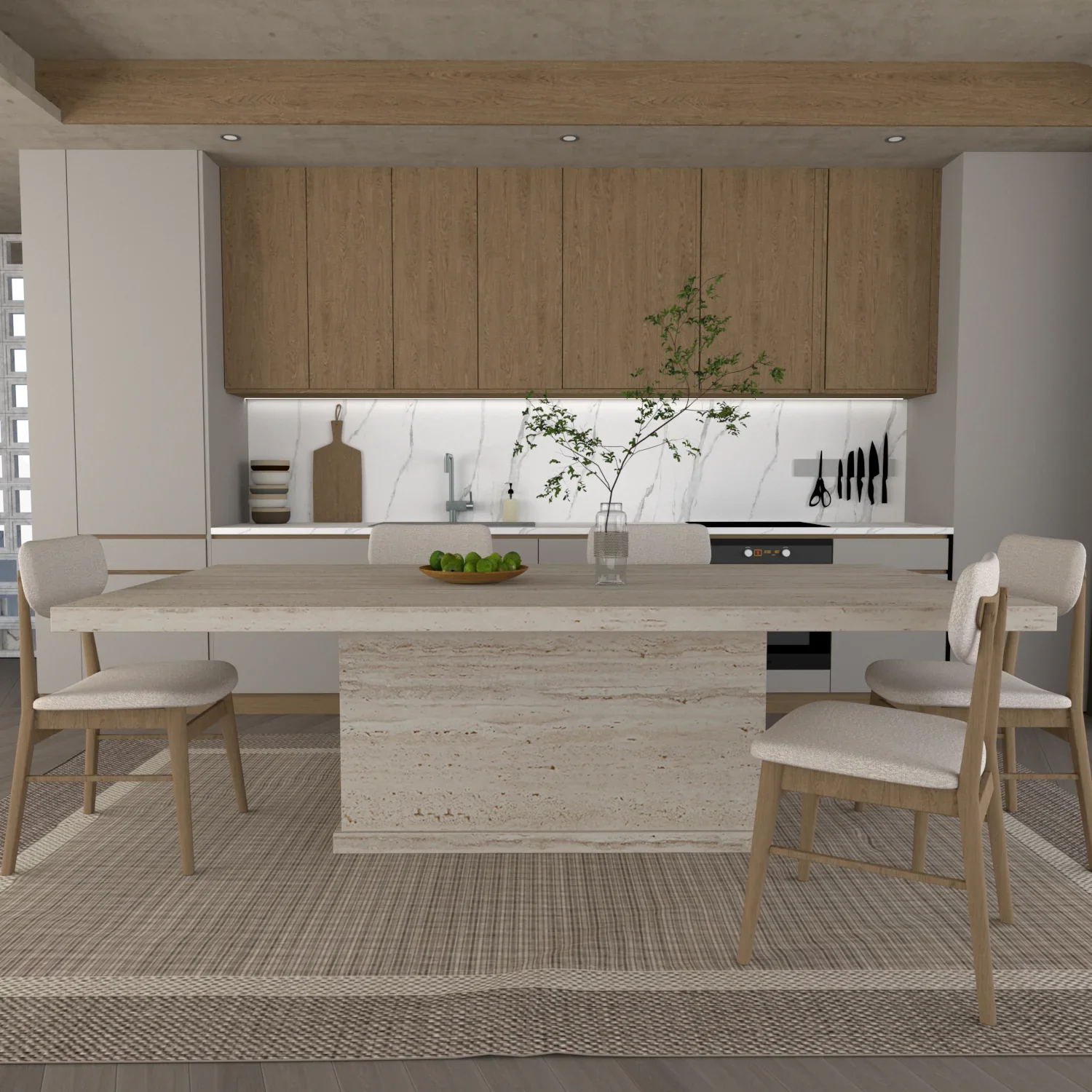
A marble vs granite table decision usually comes down to character, care and where the piece will live. Both are natural stones. Both can make substantial furniture. But they do not look, feel or behave in the same way.
Marble is known for veining, softness of movement and a more refined surface character. Granite is denser, harder in feel and often more mineral or architectural. The right choice depends on the room, how the table will be used, and whether you want the stone to feel calm, graphic or grounded.
The Short Answer
Choose marble if you want a table with visible veining, a smoother surface character and a more composed look. Marble works well where the stone is part of the visual focus of the room.
Choose granite if you want a denser, harder-wearing stone with deeper mineral pattern and stronger visual weight. Granite can be a good choice for side tables, entrance pieces and rooms where the furniture needs to feel solid and more architectural.
Neither stone should be treated like a synthetic surface. Both need sensible care, suitable cleaning products and proper consideration before use.
What Is Marble?
Marble is a natural stone formed when limestone is changed by heat and pressure. This process creates the movement, veining and variation that marble is known for.
As furniture, marble can feel cleaner and more formal than travertine or granite. It often has a cooler surface character, especially in lighter stones. Stronger veining can make a marble table a clear focal point within a room.
Pieces such as the Duomo Marble & Wood Coffee Table show how marble can work with another natural material. The stone brings depth and surface movement, while timber adds warmth and contrast.
Explore the wider marble furniture collection to see how Virrelli uses marble across natural stone furniture.
What Is Granite?
Granite is an igneous natural stone known for density, mineral pattern and strength. It often has a speckled or crystalline appearance rather than the long, flowing veins associated with marble.
As furniture, granite tends to feel heavier and more architectural. It can bring depth to a room without relying on soft veining or warmer tones. Depending on the stone, granite can appear dark, pale, graphic or quietly mineral.
The Saluzzo Oval Granite Side Table is a good example of granite used at a smaller scale. Its oval shape softens the material, while the stone gives the piece weight and presence.
View our granite furniture collection for pieces in this material.
Marble vs Granite: Key Differences
| Feature | Marble | Granite |
|---|---|---|
| Appearance | Veined, smooth, often more refined | Speckled, crystalline, denser in character |
| General feel | Cool, composed, decorative | Solid, architectural, grounded |
| Surface movement | Veins, clouds and softer flow | Mineral flecks, grains and tighter pattern |
| Durability | Strong, but can etch and mark | Very hard-wearing, but still needs care |
| Staining risk | Can stain if not cared for | Can stain, but often more resistant |
| Acid sensitivity | More sensitive to acidic spills | Less sensitive than marble, but still needs proper cleaning |
| Best suited to | Dining tables, coffee tables, statement surfaces | Side tables, entrance pieces, compact statement furniture |
| Care level | Moderate to high | Moderate |
Durability Compared
Granite is generally harder and more resistant to everyday wear than marble. It is a dense stone, which is why it is often chosen for hard-working interiors and architectural surfaces.
Marble is still a strong natural stone, but it is more sensitive to acidic substances. Lemon, vinegar, wine, fruit juice and some cleaning products can etch the surface, leaving dull marks. This is one of the main differences between marble and granite.
That does not mean marble is unsuitable for tables. It simply means it needs the right finish, seal and habits. A marble dining table or coffee table can be used every day, but it should be treated as real stone rather than a surface that can take anything.
Granite is more forgiving in some ways, but it is not indestructible. It can still chip if struck hard, and the surface should still be protected from harsh cleaners, rough objects and neglected spills.
Staining, Sealing and Etching
Both marble and granite should usually be sealed when used for furniture. Sealing helps reduce the risk of staining by slowing down how quickly liquids can enter the stone.
Marble has an extra issue: etching. Etching is not the same as staining. A stain changes the colour of the stone. Etching dulls the surface because acid has reacted with it.
Granite is less prone to acid etching than marble, but it still deserves careful cleaning. Do not use harsh household sprays, abrasive pads or aggressive chemicals on either stone.
For both materials, the best habits are simple:
- Wipe spills promptly
- Use coasters for drinks
- Use placemats for food
- Use trays or felt pads under decorative objects
- Clean with a pH-neutral natural stone cleaner
- Avoid vinegar, lemon, bleach and abrasive products
Appearance and Character
Marble usually has a more fluid, expressive appearance. Its veining can be quiet and pale or strong and graphic. This makes it useful where the table needs to bring movement into the room.
Granite has a tighter, more mineral pattern. It can feel calmer from a distance but more detailed up close. Darker granites can make a room feel more grounded, while paler granites can give weight without too much visual contrast.
Think of marble as more veined and composed. Think of granite as denser and more architectural.
Both stones vary naturally. No two slabs are exactly the same, and that variation should be part of the decision rather than something to hide.
Marble Tables
A marble table works well when the surface itself is meant to be seen. Dining tables, coffee tables and occasional pieces can all use marble effectively, provided the room suits the material.
Marble pairs well with timber, bronze, soft upholstery, plaster, darker accents and clean architectural lines. It can make a table feel more refined without needing added decoration.
For dining, marble should be chosen with care. The finish, sealing and expected use all matter. A table used daily for meals will need more protection and maintenance than a table used mainly as a feature piece.
Granite Tables
A granite table often feels more solid and grounded than marble. It can work well in hallways, living rooms, bedrooms, foyers and compact spaces where a smaller table still needs presence.
Granite is especially useful where the furniture should feel substantial but not overly veined. Its mineral pattern gives the surface interest without the softer movement of marble.
Side tables are a natural fit for granite. The material gives a compact piece enough weight to hold its place in the room, while an oval or rounded form can stop it feeling too severe.
Which Is Better for Dining Tables?
Marble is often the stronger visual choice for a dining table if you want veining and a more composed surface. It can make the dining area feel considered and permanent.
Granite can also work for dining tables, especially where durability and density are priorities, but the look is usually more architectural and less soft than marble.
For daily dining, the decision should not be made on appearance alone. Think about the food and drink used at the table, how often it will be cleaned, whether children will use it, and how much visible marking you are comfortable with over time.
Which Is Better for Coffee Tables and Side Tables?
For coffee tables, marble often works well because it gives the centre of the living room a clear surface character. It can bring contrast and movement without requiring a large table.
Granite works particularly well for side tables and smaller occasional pieces. Its density gives the table presence, even when the footprint is modest.
Both stones need simple day-to-day care. Coffee tables are exposed to drinks, candles, books and decorative objects. Side tables are often used for lamps, glasses, vases and personal items. Coasters and soft pads are sensible for both.
Which Should You Choose?
Choose marble if you want veining, a smoother visual character and a more refined table surface. It is a good choice where the stone should be noticed.
Choose granite if you want density, durability and a stronger architectural feel. It is a good choice where the table should feel solid, grounded and less delicate in character.
There is no universal winner. Marble and granite do different jobs well. The best stone is the one that suits the room, the intended use and the way you want the furniture to feel.
Marble vs Granite FAQs
Is granite better than marble for tables?
Granite is generally harder and more resistant to wear than marble, but that does not automatically make it better. Marble offers veining and a more refined surface character. Granite offers density, strength and a more architectural feel.
Does marble stain more easily than granite?
Marble can be more sensitive to staining and etching, especially from acidic spills. Granite is usually more resistant, but it can still stain if liquids are left on the surface. Both stones should be sealed and cared for properly.
What is etching on marble?
Etching is a dull mark caused when acid reacts with the marble surface. Lemon, vinegar, wine, fruit juice and some cleaning products can cause etching. Sealing helps with staining, but it does not fully prevent etching.
Is granite suitable for side tables?
Yes. Granite works well for side tables because it has density, weight and natural pattern. It can give a compact piece strong presence without needing a large footprint.
Is marble suitable for dining tables?
Yes. Marble can be used for dining tables when properly finished, sealed and cared for. It needs sensible use, especially around acidic food, wine, coffee, oil and cleaning products.
Which looks more luxurious, marble or granite?
Marble is often seen as more refined because of its veining and smoother movement. Granite can feel more grounded, architectural and substantial. Both can feel luxurious when the proportions, finish and setting are right.
Are marble and granite tables handmade by Virrelli?
Virrelli tables are handmade in England and made to order from natural stone, including marble and granite pieces within the wider collection.


