


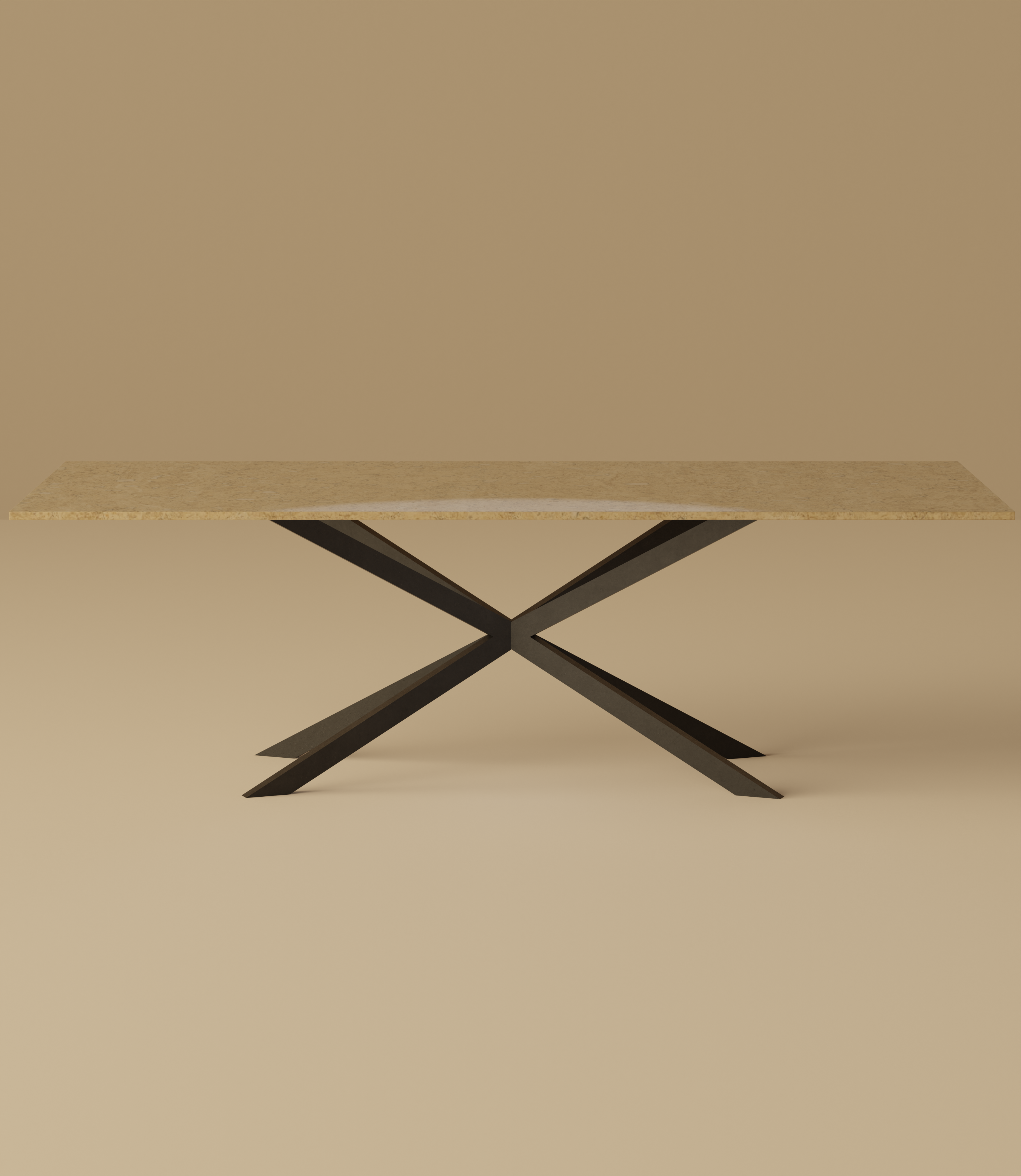
Travertine table pros and cons are worth understanding before you choose the stone. Travertine is beautiful, substantial and full of natural character, but it is not a synthetic surface. It has pores, variation and a material honesty that needs simple care.
So, is travertine durable? Yes, when it is properly made, finished, sealed and used sensibly. Travertine has been used in architecture for centuries. As a table material, it brings weight, warmth and texture, but it should still be treated as natural stone.
The Short Answer
A travertine table is a strong choice if you want natural stone with warmth, visible texture and a grounded feel. It works well for dining tables, coffee tables and side tables, especially in rooms built around natural materials.
The main drawbacks are care and weight. Travertine can stain if spills are left on the surface. It can also chip if struck hard on an edge. It should be sealed, cleaned with suitable products and protected from acidic spills, oils and harsh cleaners.
Choose travertine if you want real material character. Avoid it if you want a surface that behaves like laminate, porcelain or plastic.
What Is Travertine?
Travertine is a natural limestone formed by mineral-rich water. It is known for warm tones, visible pores, soft bands and subtle movement through the stone.
Those pores are part of its character. Some travertine is filled to create a smoother surface. Some is left more open for a more textured appearance. For tables, the finish needs to balance beauty with practical use.
Virrelli uses travertine across pieces such as the Ravenna Oval Travertine Dining Table and the Aventino Round Travertine Coffee Table. In both cases, the material gives the table weight without making the room feel cold.
Explore the wider travertine furniture collection to see how the stone works across dining, coffee and side tables.
The Pros of Travertine Tables
The main advantage of travertine is character. It has a softer, warmer appearance than many other stones. It feels natural, calm and architectural rather than polished or overly formal.
Travertine also works well with other materials. It sits comfortably alongside timber, plaster, wool, linen, leather, bronze and neutral colours. This makes it easy to use in dining rooms, living rooms and bedrooms.
A travertine dining table can create a permanent centre for the room. A travertine coffee table can ground a seating area. A travertine side table can bring a compact sculptural piece beside a sofa, chair or bed.
Its natural variation is another strength. No two tables will be exactly the same. The pores, bands, tone and movement make each piece individual.
The Cons of Travertine Tables
Travertine is porous, so it needs care. Spills should not be left on the surface, especially wine, coffee, oil, citrus, vinegar and strongly coloured sauces.
It should also be cleaned with the right products. Harsh household sprays, bleach, vinegar, lemon and abrasive pads can damage the surface or affect the finish.
Weight is another consideration. A travertine table is substantial. That is part of its appeal, but it also means delivery, placement and room planning need thought. Once positioned, it is not the kind of furniture you move casually every week.
Travertine can also chip if knocked hard, especially around edges or corners. A well-made table is strong, but natural stone should not be treated carelessly.
Is Travertine Durable?
Yes, travertine is durable when used properly. It has a long history as an architectural stone, and it can work very well for furniture.
The important point is that durability does not mean indestructibility. A travertine table can handle everyday life, but it should be sealed, cleaned correctly and protected from avoidable damage.
For dining tables, durability depends on the stone, thickness, support, finish, sealing and how the table is used. For coffee tables and side tables, it also depends on the objects placed on the surface and how often drinks or decorative items are moved across it.
Good craft matters. A travertine table should be properly proportioned, supported and finished so the stone can do its job.
Does Travertine Stain?
Travertine can stain if liquid is allowed to soak into the stone. Oil, wine, coffee, tea and coloured sauces are common risks.
Sealing helps reduce the chance of staining by slowing down absorption. It gives you more time to clean a spill before it becomes a problem. It does not make the stone impossible to mark.
The best habit is simple: wipe spills promptly. Blot rather than rub. Clean with warm water or a pH-neutral stone cleaner, then dry the surface.
If you want a table that can be ignored completely, travertine is not the right material. If you are happy to use coasters, placemats and sensible cleaning habits, it can be very liveable.
Is Travertine Good for Dining Tables?
Travertine is a strong material for dining tables because it has warmth, weight and a natural surface character. It gives the dining space a clear centre without feeling too glossy or severe.
For a dining table, the size and shape matter. Round travertine tables feel sociable and calm. Oval travertine dining tables provide more length and seating while keeping a softer outline. Rectangular designs suit larger rooms and stronger architectural layouts.
View our travertine dining tables for dining pieces made in this material.
Travertine dining tables do need sensible care. Use placemats for meals, wipe spills quickly and avoid acidic cleaners. The table should be used, but not neglected.
Is Travertine Good for Coffee Tables?
Travertine works very well for coffee tables. Its texture and tone make the centre of a living room feel grounded, while its natural variation keeps the piece from feeling flat.
A round travertine coffee table can soften the straight lines of sofas, rugs and cabinetry. A square travertine coffee table can create a more structured centre for larger seating areas.
The Aventino Round Travertine Coffee Table is a good example of travertine used in a low, central form. The stone gives the piece presence, while the round shape keeps it easy to live around.
Explore our travertine coffee tables for more pieces in this material.
Is Travertine Good for Side Tables?
A travertine side table is useful where you want a smaller piece with more presence than a lightweight timber or metal table.
It can sit beside a sofa, armchair or bed, holding a lamp, book, drink or small object. Because the footprint is compact, the stone gives the piece enough weight to feel settled in the room.
The Navona Travertine Side Table shows how travertine can work at a smaller scale. It feels sculptural, but still practical.
View our travertine side tables for compact natural stone pieces.
Travertine vs Marble and Granite
Travertine is usually warmer and more textured than marble. Marble often has stronger veining and a cooler, smoother surface character. Travertine tends to feel calmer and more architectural.
Granite is denser and harder in feel. It often has a more mineral or crystalline appearance, with greater visual weight and contrast.
Travertine sits between softness and substance. It has enough weight to feel serious, but enough warmth to suit relaxed interiors.
The right choice depends on the room. Choose travertine for warmth and texture. Choose marble for veining and a more composed surface. Choose granite for density and contrast.
How to Care for a Travertine Table
Travertine care is straightforward if you use the right products.
Clean with a soft cloth, warm water and a pH-neutral cleaner made for natural stone. Dry the surface after cleaning.
Avoid vinegar, lemon, bleach, abrasive pads and strong household sprays. These can damage the stone or its finish.
Use coasters for drinks, especially wine, coffee and anything acidic. Use placemats for meals. Use felt pads under decorative objects with rough bases.
A travertine table should usually be sealed. Resealing depends on the stone, finish and how the table is used. A dining table used every day may need more attention than a side table used occasionally.
When Travertine Is the Right Choice
Travertine is the right choice if you want a table with natural warmth, visible texture and long-term presence. It suits homes where materials are chosen carefully and kept for years.
It is especially strong in rooms with timber floors, neutral walls, plaster finishes, natural fabrics, bronze details or soft architectural lighting.
It may not be the right choice if you want a completely uniform surface, a very glossy finish or a table that can be treated with no care at all.
Travertine rewards people who like real materials. It asks for simple care in return.
Travertine Table FAQs
Is travertine durable?
Yes. Travertine is durable when properly made, finished, sealed and cared for. It is a natural limestone with a long history in architecture, but it should still be protected from staining, harsh cleaners and heavy impact.
What are the disadvantages of a travertine table?
The main disadvantages are porosity, weight and care. Travertine can stain if spills are left on the surface, it can chip if struck hard, and it should be cleaned with stone-safe products.
Does travertine stain easily?
Travertine can stain if it is unsealed or if spills are left too long. Oil, wine, coffee and strongly coloured liquids are the main risks. Sealing helps, but spills should still be wiped promptly.
Is travertine good for dining tables?
Yes. Travertine works well for dining tables because it has weight, warmth and natural character. It should be sealed and cared for sensibly, especially around food, drink and cleaning products.
Is travertine better than marble?
Neither is simply better. Travertine is usually warmer, more textured and more visually forgiving. Marble is often smoother, cooler and more strongly veined. The right choice depends on the room and how the table will be used.
Can you put hot items on travertine?
Avoid placing hot pans, dishes or appliances directly on travertine. Use trivets or heat-resistant mats. Sudden heat and rough bases can damage the surface or finish.
How do you clean a travertine table?
Use a soft cloth, warm water and a pH-neutral natural stone cleaner. Dry the surface after cleaning. Avoid vinegar, lemon, bleach, abrasive pads and harsh household sprays.
Do travertine tables need sealing?
Yes, travertine tables should usually be sealed to help protect against staining. The correct seal and resealing schedule depend on the stone, finish and how the table is used.


