


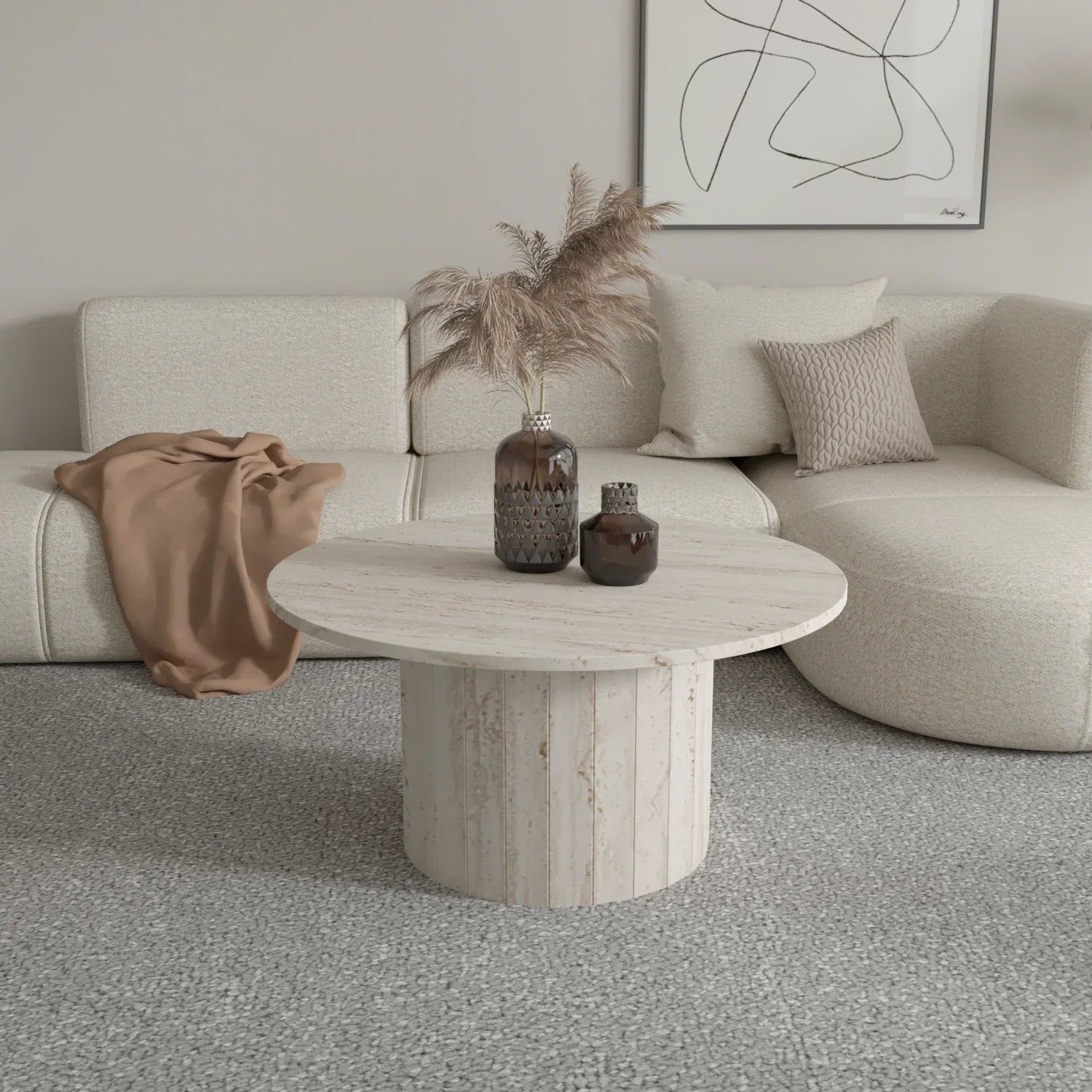
Living room styling works best when the furniture feels useful, balanced and properly placed. Stone furniture can help with that. A natural stone coffee table gives the seating area a clear centre, while stone side tables add weight and purpose to the edges of the room.
Travertine, marble and granite all bring different character. Travertine feels warm and textured. Marble brings veining and a cooler surface. Granite feels denser and more architectural. The right choice depends on the room, the sofa, the light and how you use the space every day.
The Short Answer
Use a stone coffee table when the living room needs a stronger centre. Use stone side tables when you need useful surfaces beside sofas, armchairs or reading chairs.
Keep the styling simple. Natural stone already has pores, veining, tone and movement. It does not need to be covered with objects. Let the table breathe, and use accessories that support the material rather than compete with it.
Explore our stone coffee tables and stone side tables to compare shapes, materials and proportions.
Why Stone Works in a Living Room
A living room needs furniture that can handle daily use without feeling temporary. Stone helps because it brings substance. It anchors the seating area and gives the room a calmer, more permanent feel.
A stone table also works well with the materials already found in many living rooms: timber, wool, linen, leather, plaster, glass, bronze and soft upholstery. It can sit comfortably in both older houses and more contemporary spaces.
The key is balance. Stone has visual weight, so the room needs enough softness around it. A travertine table beside a linen sofa, wool rug and timber shelving will feel very different from the same table beside dark leather and polished metal.
Choosing a Stone Coffee Table
The coffee table is usually the centre of the living room. It should relate to the sofa, chairs and rug, not just the size of the room.
A round stone coffee table softens the layout. It works well where people need to move around the seating area, or where the room already has strong straight lines. The Aventino Round Travertine Coffee Table is a good example of this. The round form keeps the piece easy to live around, while the travertine gives it weight and texture.
A square stone coffee table creates a more ordered centre. It can work well with corner sofas, larger rugs and living rooms where the furniture is arranged around a clear central point.
For more shape options, view our round coffee tables and square coffee tables.
Using Stone Side Tables
Side tables are often more important than people realise. They make individual seats more useful. A side table beside a sofa, armchair or reading chair can hold a lamp, drink, book or small object without needing a large central table.
A stone side table also helps bring material weight into smaller parts of the room. The Navona Travertine Side Table, for example, works as a compact piece but still has enough presence to feel considered.
Side tables are useful in pairs, but they do not always need to match exactly. In a relaxed living room, one travertine side table and one coffee table in the same material can create a connected scheme without making the room feel overly matched.
View our travertine side tables for compact natural stone pieces.
Matching Coffee Tables and Side Tables
A living room does not need every piece to be identical. In fact, natural stone often works better when the room feels collected rather than fully matched.
You can repeat the same stone across the coffee table and side table if you want a calm, consistent scheme. Travertine is especially good for this because its warm tone can sit quietly across several pieces.
You can also mix materials. A marble coffee table can be softened with timber, fabric and warmer side furniture. A granite side table can sit well beside lighter upholstery or a pale rug. The aim is not to match every surface. The aim is to make the room feel balanced.
Placing Stone Furniture Around a Sofa
Start with the seating. The coffee table should sit close enough to use, but not so close that it blocks movement. It should feel connected to the sofa and chairs, even if it is not exactly centred in the room.
Side tables should sit where people naturally reach. Beside a sofa arm, next to an occasional chair or near a reading corner usually works best.
Think about how the room is used:
- Where do people put drinks?
- Is there space for books or remotes?
- Does a lamp need a side table?
- Is the coffee table blocking the route through the room?
- Does the stone feel balanced by softer materials around it?
Stone furniture should make the room easier to use, not just better photographed.
Styling a Stone Coffee Table
A stone coffee table should not be covered completely. The surface is part of the design.
Use a few objects with different heights and textures. A low bowl, a stack of books, a small tray, a candle or a ceramic object can be enough. Leave empty space so the stone can be seen.
For travertine, warm natural materials usually work well. Use ceramic, timber, linen, leather, paper and soft neutral tones. For marble, keep the styling more restrained so the veining can lead. For granite, lighter objects can create contrast against the denser stone.
Avoid dragging rough objects across the surface. Use felt pads, trays or coasters where sensible.
Styling Stone Side Tables
Side tables need to stay practical. A lamp and a coaster may be enough. If the surface is small, avoid crowding it with decorative pieces.
A stone side table beside an armchair can support a reading lamp and one useful object. Beside a sofa, it can hold a drink, book or small tray. In a larger room, a side table can also help connect seating that sits beyond easy reach of the coffee table.
Let the stone carry some of the visual weight. Smaller tables do not need heavy styling when the material already has texture and character.
Choosing the Right Rug
A rug can help anchor stone furniture within the living room. It gives the table somewhere to sit visually and softens the weight of the material.
A round coffee table can sit on a rectangular, square or round rug. The best choice depends on the sofa layout. In most living rooms, a rectangular rug is the easiest option because it can connect the sofa, chairs and table.
Make sure the rug is large enough. A small rug under a heavy stone table can make the furniture feel disconnected. A larger rug gives the stone room to settle within the space.
Living with Natural Stone
Stone furniture is made to be used, but it should be treated as natural material.
Use coasters for drinks. Wipe spills promptly. Avoid vinegar, lemon, bleach, abrasive pads and harsh household sprays. Use a pH-neutral cleaner suitable for natural stone.
Travertine, marble and granite all have different care needs, but the principle is the same. Protect the surface, clean it gently and do not leave spills sitting on the stone.
Good care should become part of using the room, not something that makes the furniture difficult to live with.
Common Living Room Styling Mistakes
The first mistake is choosing a table that is too small. Stone has presence, but it still needs the right scale. A small table in a large seating area can look lost.
The second mistake is placing the coffee table too far from the sofa. It may look neat in a photograph, but it will not work well day to day.
The third mistake is overstyling. Too many objects can make a stone table feel cluttered. A few pieces, placed with space around them, usually looks better.
The final mistake is ignoring the rest of the room. Stone needs balance. Use soft fabrics, warm lighting, rugs and natural textures to make the furniture feel settled.
Stone Furniture Living Room FAQs
Is stone furniture good for living rooms?
Yes. Stone furniture works well in living rooms because it brings weight, natural texture and a clear sense of permanence. Coffee tables and side tables are especially suitable.
Is a stone coffee table practical?
A stone coffee table can be practical when it is properly finished, sealed and cared for. Use coasters, wipe spills promptly and clean with products made for natural stone.
What shape coffee table is best for a living room?
Round coffee tables suit rooms where movement matters or where you want to soften straight lines. Square coffee tables work well in larger seating areas and with corner sofas.
Can I mix stone with wood furniture?
Yes. Stone and wood work well together. Travertine with oak, marble with darker timber, and granite with richer woods can all create strong living room schemes.
Should side tables match the coffee table?
They can, but they do not have to. Matching stone can create a calm scheme, while mixed materials can make the room feel more natural and less formal.
How do you style a travertine coffee table?
Keep it simple. Use books, a tray, a low bowl or a small vase, and leave enough exposed surface for the travertine to be seen. Warm, natural accessories usually work best.
How do you protect stone tables in a living room?
Use coasters, trays and felt pads under objects with rough bases. Wipe spills quickly and avoid harsh cleaners, acidic liquids and abrasive pads.


