


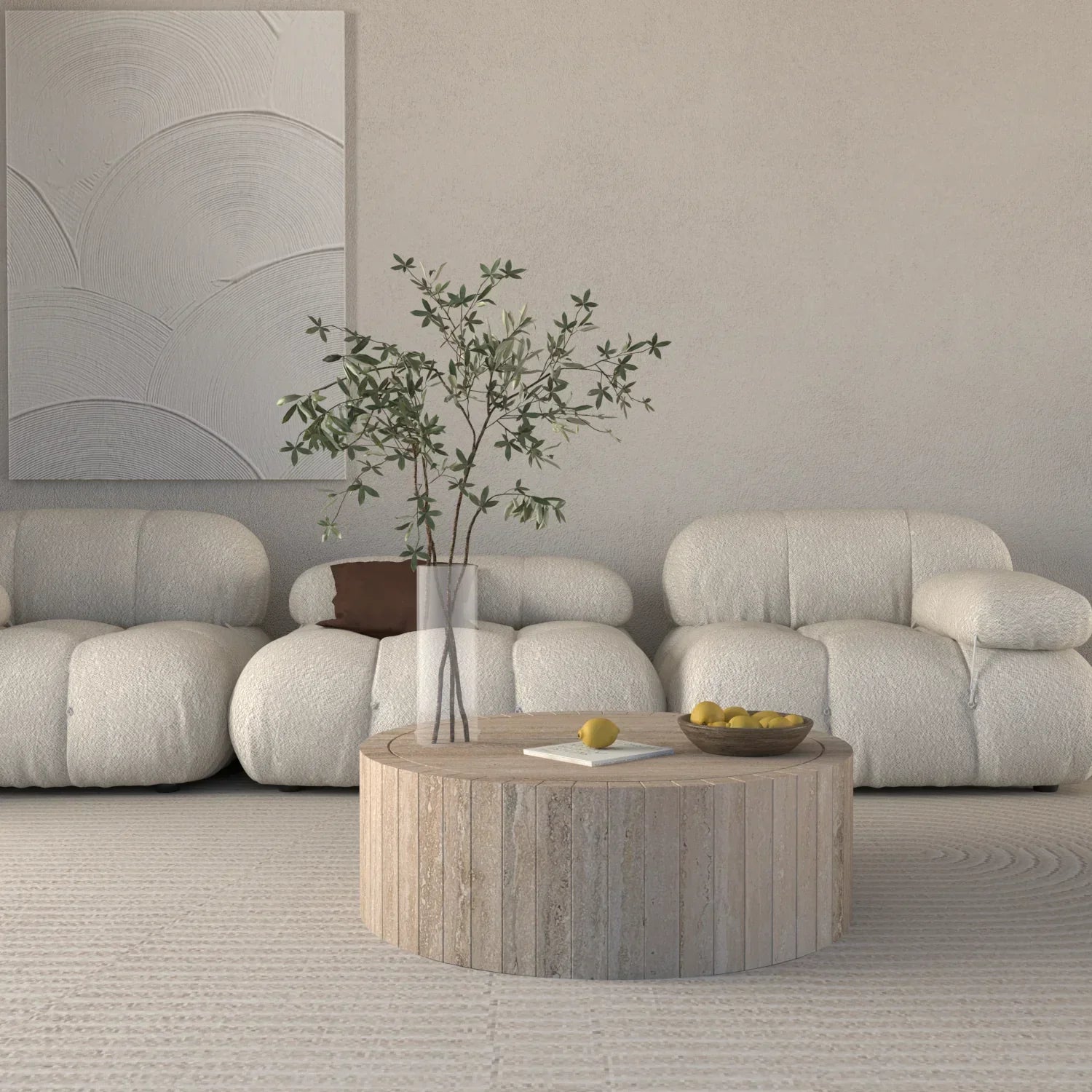
What is travertine? Travertine is a natural limestone formed by mineral-rich water, known for its warm tones, visible pores and quiet surface movement. It is one of the oldest stones used in architecture, and one of the most useful materials for furniture that needs weight, texture and presence.
At Virrelli, travertine is used for dining tables, coffee tables and side tables made to order in England. The appeal is simple. Travertine feels solid without feeling cold. It has history, but it still belongs in modern rooms.
The Short Answer
Travertine is a type of natural limestone. It usually forms around mineral springs, where calcium carbonate is deposited over time. This process gives travertine its layered movement, soft colour variation and natural pores.
In furniture, those pores and markings are part of the character. Travertine is not meant to look factory-smooth or identical from one table to the next. Each piece has its own tone, pattern and texture.
How Travertine Forms
Travertine forms when mineral-rich water leaves calcium carbonate behind. Over time, those deposits build into stone. The result is a limestone with visible texture, natural cavities and bands of colour.
This is why travertine often has a warmer, more open character than marble. It does not usually have the same strong veining. Instead, it has softer movement, small pores and a more architectural feel.
The stone is commonly found in cream, beige, ivory, honey and warmer earthy tones. These colours make it easy to use with timber, plaster, linen, wool, leather and other natural materials.
Why Is Travertine Linked to the Colosseum?
Travertine has a long association with Roman architecture. The Colosseum was built using travertine limestone, along with other materials such as tuff and Roman concrete.
That connection matters because it shows what kind of material travertine is. It is not a passing interiors trend. It is a stone with weight, history and architectural purpose.
In the home, travertine gives furniture some of that same grounded quality. A table made from travertine does not need heavy decoration. The material already carries enough character.
Why Does Travertine Have Pores?
The pores in travertine come from the way the stone forms. They are one of its most recognisable features.
Some travertine is filled to create a smoother surface. Some is left more open to show its natural texture. The right finish depends on the piece, the intended use and the look of the room.
For tables, the surface needs to be practical as well as beautiful. That is why the finish, edge detail and sealing should be considered carefully.
Travertine as a Furniture Material
Travertine works especially well for tables because it has mass, warmth and natural variation. It can make a room feel calmer and more grounded without looking overdesigned.
A travertine dining table can create a permanent centre for meals and gatherings. The Ravenna Oval Travertine Dining Table shows how the material can soften a larger dining piece, while still keeping its substance.
A travertine coffee table brings the same character into a living room. The Aventino Round Travertine Coffee Table uses the stone in a lower, more central form, giving the seating area weight without sharp corners.
Explore the wider travertine furniture collection to see how the material works across different table types.
Travertine Dining Tables, Coffee Tables and Side Tables
Travertine can change character depending on scale and shape.
A large dining table feels architectural and permanent. A coffee table feels grounded and tactile. A side table feels more sculptural, especially when placed beside a sofa, armchair or bed.
For dining spaces, view our travertine dining tables. For living rooms, explore travertine coffee tables. For compact pieces, browse travertine side tables.
Travertine vs Marble
Travertine and marble are both natural stones, but they behave visually in different ways.
Travertine is usually warmer, more textured and more porous in appearance. Marble is often smoother, cooler and more defined by veining. Travertine tends to calm a room down. Marble tends to sharpen it.
Neither is simply better. The right choice depends on the room, the intended use and the material character you prefer.
How to Care for Travertine
Travertine should be treated as natural stone. Use a soft cloth, warm water and a pH-neutral cleaner suitable for stone surfaces. Avoid vinegar, lemon, bleach, abrasive pads and harsh household sprays.
Sealing helps protect the stone, especially on tables used for food, drink or daily objects. It does not make travertine impossible to mark, but it gives useful protection when paired with sensible care.
Wipe spills promptly, use coasters where needed, and avoid leaving oil, wine, coffee or acidic liquids on the surface.
Travertine FAQs
Is travertine a natural stone?
Yes. Travertine is a natural limestone formed by mineral-rich water deposits. Its pores, tonal variation and surface movement are part of the material.
Is travertine the same as marble?
No. Travertine and marble are different natural stones. Travertine usually has warmer tones, visible pores and softer movement. Marble is often smoother, cooler and more strongly veined.
Why is travertine used for tables?
Travertine has weight, warmth and natural texture. It gives tables a grounded, architectural quality while still feeling calm enough for everyday interiors.
Does travertine stain?
Travertine can stain if spills are left on the surface, especially oil, wine, coffee and acidic liquids. Sealing helps, but the table should still be cleaned promptly and cared for properly.
Is travertine suitable for dining tables?
Yes. Travertine is suitable for dining tables when properly finished, sealed and cared for. It is a real stone, so it should be treated with respect rather than used like a synthetic surface.
Is every travertine table different?
Yes. Every piece of travertine has its own tone, pores, lines and surface movement. This natural variation is part of the appeal.


