


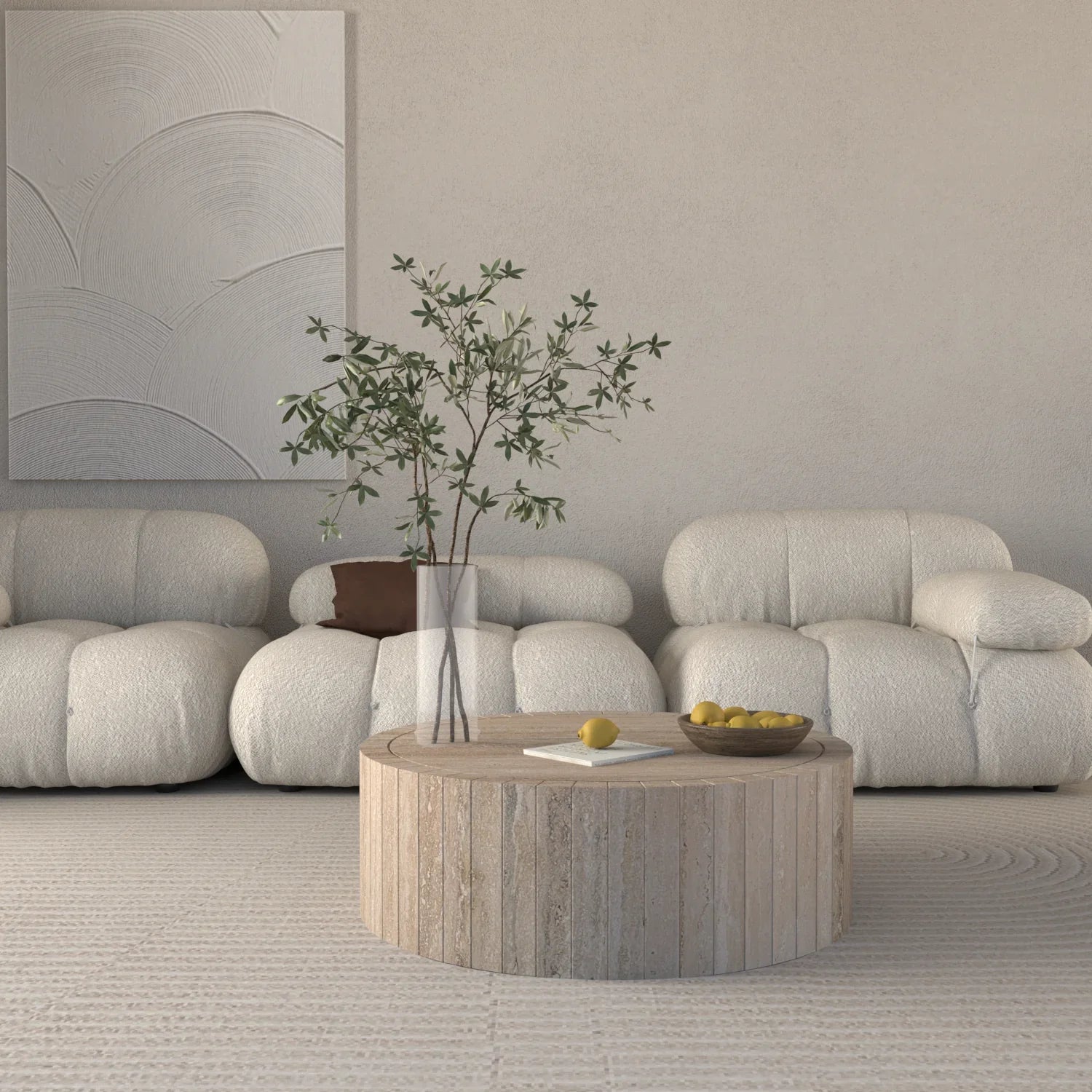
How are stone tables made? The simple answer is slowly, carefully and with respect for the material. A natural stone table begins long before it reaches a dining room, living room or hallway. It starts with quarried stone, selected for its tone, movement, strength and suitability for the piece being made.
At Virrelli, each table is handmade in England and made to order. The process is not about forcing stone into a standard shape. It is about choosing the right material, cutting it properly, finishing it by hand and making sure the finished table feels settled, useful and built to last.
The Short Answer
A handmade stone table is made by selecting a suitable slab of travertine, marble or granite, cutting it to size, shaping the edges, preparing the base, finishing the surface, sealing the stone and carefully delivering the finished piece.
Every stage matters. Stone is heavy, natural and individual. It cannot be treated like flat-pack furniture or a printed surface. The craft is in understanding what the material will allow, then making a table that keeps its character intact.
Explore our stone furniture to see the finished result across dining tables, coffee tables and side tables.
1. It Starts with the Stone
Every table starts with material selection.
Travertine, marble and granite all behave differently. Travertine has warm tones, visible pores and soft movement. Marble has veining and a cooler, more composed surface. Granite is dense, mineral and often more architectural.
The right stone depends on the design, scale and intended use. A dining table needs a different kind of consideration from a compact side table. A coffee table may focus more on surface character and proportion. A large bespoke piece may require careful slab choice before any cutting begins.
Virrelli works across travertine furniture, marble furniture and granite furniture, with each stone chosen for the job it needs to do.
2. The Design Is Planned Around the Material
A stone table cannot be designed without thinking about weight, balance and support.
The shape, size, edge, base and thickness all need to work together. A round dining table has different structural needs from an oval table. A square coffee table needs different visual balance from a sculptural side table.
This is where made-to-order craft matters. The design is not only drawn for appearance. It is planned around how the stone will be cut, supported, finished and used.
For special projects, the process may also involve bespoke sizing, a different stone, a different edge detail or a design made around a particular room. View our bespoke stone furniture page for more on made-to-order commissions.
3. The Slab Is Cut
Once the stone and design are agreed, the slab is cut to the required shape and size.
This stage needs accuracy. The cut affects the finished proportions, the edge detail, the placement of the natural pattern and the way the piece will sit in the room.
With natural stone, the slab itself influences the final table. Veining, pores, bands and mineral movement need to be considered before cutting. The aim is to make the most of the material, not hide it.
For a piece such as the Ravenna Oval Travertine Dining Table, the long curved form needs careful proportion. The shape softens the table visually, but the stone still gives it presence and weight.
4. Edges Are Shaped and Refined
After cutting, the edges are shaped and finished.
The edge profile has a quiet but important effect on the whole table. A sharp-looking edge can feel architectural. A softened edge can make the piece feel calmer and more practical in a home. A thicker edge gives weight. A finer edge can make a table feel more refined.
Stone edges also need to be handled with care because they are often the most vulnerable part of the table. Good finishing makes the piece feel considered from every angle, not just from above.
This matters across all table types, from stone dining tables to stone coffee tables and stone side tables.
5. The Base Is Made to Support the Stone
The base is not an afterthought. It has to carry the stone safely and suit the design visually.
Some stone tables use a pedestal base. Others use a more linear or sculptural support. The important point is balance. The table must feel stable, proportioned and comfortable to use.
A pedestal dining table is a good example. With no corner legs, chairs can sit more freely around the edge. But the central base must be properly designed to support the weight of the stone above it.
The Aventino Round Travertine Pedestal Dining Table shows this relationship between material, base and shape. It is a round dining piece, but the success of the design depends on the weight being properly carried through the centre.
View our pedestal dining tables for this kind of structure.
6. The Surface Is Finished
Surface finishing affects how the stone looks, feels and behaves.
A honed finish gives a softer, lower-sheen surface. It often suits furniture because it feels calm and natural rather than overly glossy. A polished finish gives more reflection and can make colour or veining appear stronger.
Travertine may also be filled, depending on the desired look and use. Filling helps smooth some of the natural pores, making the surface more practical for tables while keeping the stone’s character visible.
The finish should suit the piece. A travertine coffee table used every day needs a surface that feels tactile but practical. A travertine dining table needs to balance beauty with cleaning, food, drink and daily contact.
7. The Stone Is Sealed
Many natural stone tables should be sealed before use. Sealing helps reduce the risk of staining by slowing down how quickly liquids can enter the stone.
This is especially important for travertine and marble. Both are beautiful furniture materials, but they should be protected properly. Granite is generally denser, but it can still benefit from suitable care depending on the finish and use.
Sealing does not make stone impossible to mark. It gives useful protection, but the table should still be cleaned with stone-safe products and treated with sensible care.
A handmade stone table is not difficult to live with. It simply asks to be used properly.
8. The Table Is Checked as a Finished Piece
Before a stone table leaves the workshop, it needs to be checked as a complete object.
The surface, edges, base, joins, finish and overall proportions all matter. The table has to look right, but it also has to feel right. It should sit properly, support its own weight and work as furniture rather than simply as a piece of stone.
This is one of the differences between stone as a material and stone as a finished table. A slab may be beautiful, but the craft is in turning that slab into something useful, balanced and lasting.
9. Delivery and Placement Are Planned Carefully
A stone table is heavy. Delivery needs proper planning.
Access routes, doorways, stairs, floors and final placement all need to be considered before the table arrives. Large dining tables and substantial coffee tables are not casual pieces to move around after delivery.
This planning is part of the process. A stone table should arrive safely, be positioned carefully and feel settled in the room from the start.
For larger dining pieces, it is worth thinking about the room layout, chair clearance and daily movement before the final size is confirmed. Our stone dining table size guide can help with that decision.
10. The Table Becomes Part of the Room
The final stage is the one that matters most: the table in use.
A stone dining table changes how a dining room feels. A stone coffee table gives a living room a stronger centre. A stone side table can bring weight and purpose to a smaller corner, sofa end or bedside space.
This is why the making process matters. Natural stone has presence before it is made into furniture, but the craft gives that presence a useful form.
From round coffee tables to oval tables, square coffee tables and travertine side tables, the same principle applies. The stone should lead, and the design should make it liveable.
Why Handmade Matters
Handmade stone furniture is not about decoration for its own sake. It is about judgment.
The maker has to understand the stone, the design, the weight, the finish and the use. They need to know when to refine an edge, when to let the material speak, and when a design needs more support or less visual noise.
A handmade table should not feel overworked. It should feel resolved.
That is the difference between a stone surface and a piece of stone furniture.
How a Stone Table Is Made FAQs
How are stone tables made?
Stone tables are made by selecting a suitable slab, cutting it to size, shaping the edges, preparing the base, finishing the surface, sealing the stone and carefully delivering the finished piece.
Are Virrelli tables handmade?
Yes. Virrelli tables are handmade in England and made to order from natural stone, including travertine, marble and granite.
What stone is used for handmade tables?
Common stones include travertine, marble and granite. Travertine is warm and textured, marble is veined and composed, and granite is dense and mineral in character.
Why does stone selection matter?
Every slab of natural stone is different. Tone, veining, pores, bands and mineral movement all affect the finished table. Good selection helps the design make the most of the material.
Are stone tables sealed?
Many stone tables should be sealed to help protect against staining. Sealing is especially useful for travertine and marble, but the correct approach depends on the stone, finish and use.
Can a stone table be made to a custom size?
Yes, bespoke sizing may be possible depending on the stone, design and construction. The room, seating requirement, access and intended use should all be considered before the table is made.
Are stone tables difficult to deliver?
Stone tables are heavy, so delivery needs planning. Access routes, doorways, stairs and final placement should be checked before the table arrives.
Is a handmade stone table practical?
Yes. A handmade stone table can be practical when it is properly designed, finished, sealed and cared for. It should be treated as natural material, not as a synthetic surface.


