


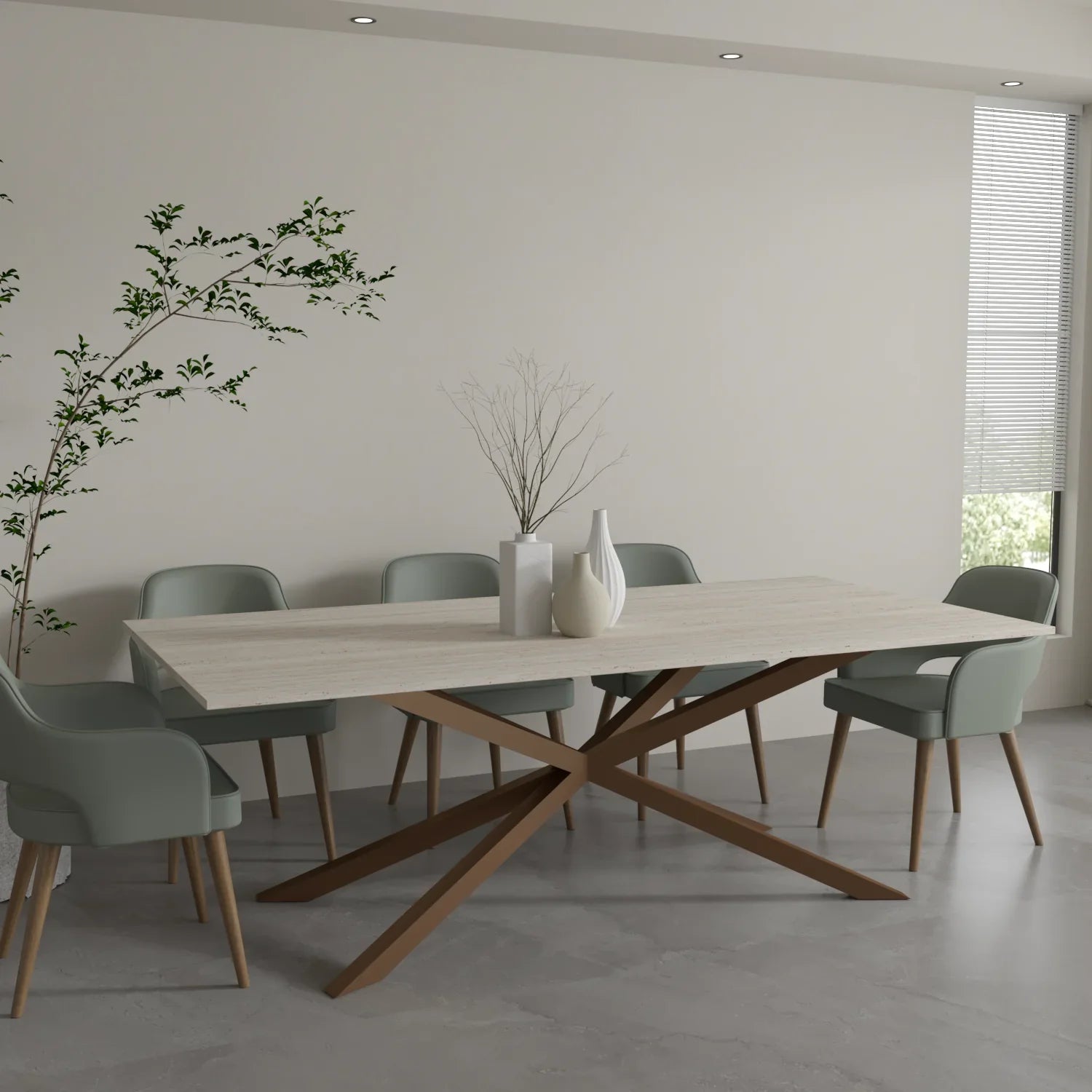
Dining room styling starts with the table. It is the piece people gather around, the surface that takes the most visual space, and often the strongest material in the room.
A stone dining table gives that centre real presence. Travertine brings warmth and texture. Marble adds veining and a more composed surface. Granite gives density, contrast and an architectural feel. The right table should work with the room, not simply sit inside it.
Explore our stone dining tables and travertine dining tables to compare shapes, materials and proportions.
The Short Answer
A good stone dining room balances weight with softness. The table can be substantial, but the room around it needs warmth, light and texture.
Use natural materials around the table: timber chairs, linen curtains, wool rugs, plaster walls, ceramic lighting and soft upholstery. Let the stone be the anchor, then build the rest of the room around it with restraint.
The aim is not to make the dining room look staged. It should feel settled, useful and ready for meals.
Start with the Table Shape
The shape of the dining table affects the whole room.
A round dining table feels sociable because everyone faces towards the centre. It also makes movement easier in square rooms, kitchens and open-plan spaces where people pass around the table from several directions.
An oval dining table gives more length and seating while keeping a softer outline. It works well in longer dining rooms and open-plan layouts where a rectangular table might feel too rigid. The Ravenna Oval Travertine Dining Table is a good example of this balance: generous enough for dining, but softened by its curved form.
A rectangular dining table suits larger rooms, more formal settings and layouts with strong architectural lines.
For curved dining forms, view our oval tables.
Use Travertine for Warmth
Travertine is one of the easiest stones to use in a dining room because it has warmth without feeling soft or lightweight.
Its pores, tonal shifts and quiet bands give the table texture. It works well with oak, walnut, plaster, linen, wool, bronze and warm neutral walls. In a room that might otherwise feel too clean or newly finished, travertine adds age and depth.
A travertine dining table can suit both modern and older houses. It is not overly polished. It feels grounded.
Browse our travertine dining tables for dining pieces made in this material.
Use Marble for Veining
Marble brings a different kind of character. It is usually cooler, smoother and more visibly veined than travertine.
A marble dining table can work well where the room needs a sharper focal point. It pairs well with darker timber, upholstered dining chairs, bronze, blackened metal and soft architectural lighting.
Keep the surrounding styling simple. Marble already has movement, so the room does not need too many competing patterns.
Think About Light
Stone changes with light. That is one of the reasons it works so well in a dining room.
Natural daylight will show the stone’s pores, veins and tonal changes more clearly. Evening light will soften the surface and make the table feel heavier, warmer and more intimate.
Pendant lighting should sit low enough to connect with the table, but not so low that it blocks conversation. A single central pendant can work well over a round table. A longer pendant or pair of lights may suit an oval or rectangular table.
Avoid lighting that is too cold. Warm, soft light usually works better with natural stone, especially travertine and marble.
Add Texture Around the Stone
Stone has weight, so it needs texture around it.
Dining chairs are one of the best places to add softness. Upholstered chairs, timber frames, leather seats or woven details can all work, depending on the room.
Curtains, rugs, wall finishes and artwork also matter. A stone dining table can feel too hard if everything around it is glossy, flat or highly polished. Balance it with materials that absorb light and soften the room.
Good pairings include:
- Travertine with oak, linen and plaster
- Marble with walnut, bronze and soft upholstery
- Granite with darker timber, wool and architectural lighting
- Stone with ceramic, leather, paper and natural fibres
Choose Chairs Carefully
The chairs need to suit the scale of the table. A stone dining table has more visual weight than a lighter timber table, so very thin or delicate chairs may feel out of balance.
That does not mean the chairs need to be heavy. Lighter chairs can work well if the proportions are right. The important thing is that the chair height, width and material feel considered against the table.
With a pedestal dining table, chairs can often sit more flexibly around the edge because there are no corner legs. The Aventino Round Travertine Pedestal Dining Table is designed around this idea, giving the table a central base and a more open seating arrangement.
View our pedestal dining tables for this kind of layout.
Keep the Surface Simple
A stone dining table does not need heavy dressing. The material is already doing much of the work.
For everyday styling, a bowl, low vase, candle group or simple ceramic piece may be enough. Keep the centrepiece low enough that people can talk across the table.
For meals, use placemats, linen, trays or tableware that supports the stone rather than hiding it completely. Travertine works well with warm ceramics and textured linen. Marble often suits cleaner tableware and fewer decorative pieces.
Leave some of the stone visible. The table should not disappear under styling.
Use Rugs with Care
A rug can soften a dining room, but it needs to be practical.
If you use a rug beneath a stone dining table, make sure it is large enough for chairs to pull out without catching on the edge. A small rug will make the table feel cramped and can be frustrating in daily use.
Flatweave or low-pile rugs usually work best. They are easier to move chairs over and less likely to trap crumbs.
In rooms with beautiful flooring, you may not need a rug at all. A stone table can sit directly on timber, limestone or large-format tiles if the room already has enough warmth elsewhere.
Let the Room Breathe
A stone dining table needs space around it. Because the material has natural weight, it should not feel squeezed into the room.
Leave enough clearance for chairs, serving, movement and the natural routes through the space. In an open-plan room, the table can help define the dining area, but it should not block movement between the kitchen, seating area and doors.
Think about how the table looks when empty. A good dining room should still feel resolved when it is not being used.
Stone Dining Rooms in Open-Plan Spaces
In open-plan rooms, the dining table often needs to connect the kitchen and living space.
Stone can help because it creates a clear material anchor. A travertine table can warm up a kitchen with painted cabinetry or pale worktops. A marble table can connect with stone surfaces elsewhere in the room. A darker stone can create contrast in a lighter scheme.
Use lighting, rugs, artwork or chair material to mark the dining area without making it feel separate from the rest of the space.
A round or oval table can be especially useful where the dining area sits between routes through the room.
Common Stone Dining Room Mistakes
The first mistake is choosing a table that is too large. A stone dining table should feel generous, but it still needs enough room around it.
The second mistake is using too many hard materials. Stone, glass, polished metal and glossy surfaces can make the room feel cold if they are not balanced with timber, fabric and warm light.
The third mistake is overdecorating the table. Natural stone has its own surface character. Let it show.
The final mistake is ignoring daily use. A dining room should look good, but it also needs to work for meals, chairs, cleaning, serving and movement.
Stone Dining Room FAQs
Is a stone dining table good for a dining room?
Yes. A stone dining table works well when the room has enough space and the table is properly proportioned. It brings weight, permanence and natural material character to the dining area.
How do you style a stone dining table?
Keep the styling simple. Use a low vase, bowl, candles, linen or ceramic pieces, and leave some of the stone visible. The surface should feel considered, not crowded.
What chairs work with a travertine dining table?
Travertine works well with timber, upholstered, leather or woven chairs. Oak, walnut, linen and wool all sit naturally with the warmth and texture of travertine.
Is a round dining table better for conversation?
A round dining table can feel more sociable because everyone faces towards the centre. It works especially well in square rooms and smaller dining spaces.
Is an oval dining table practical?
Yes. An oval dining table gives useful length and seating while keeping a softer outline than a rectangle. It can be a strong choice for longer dining rooms and open-plan spaces.
Should I use a rug under a stone dining table?
A rug can soften the room, but it needs to be large enough for chairs to pull out properly. Low-pile or flatweave rugs are usually the most practical option.
How do you stop a stone dining room feeling cold?
Balance the table with warm light, timber, fabric, rugs, curtains, ceramics and natural textures. Travertine is especially useful if you want stone with a warmer feel.


