


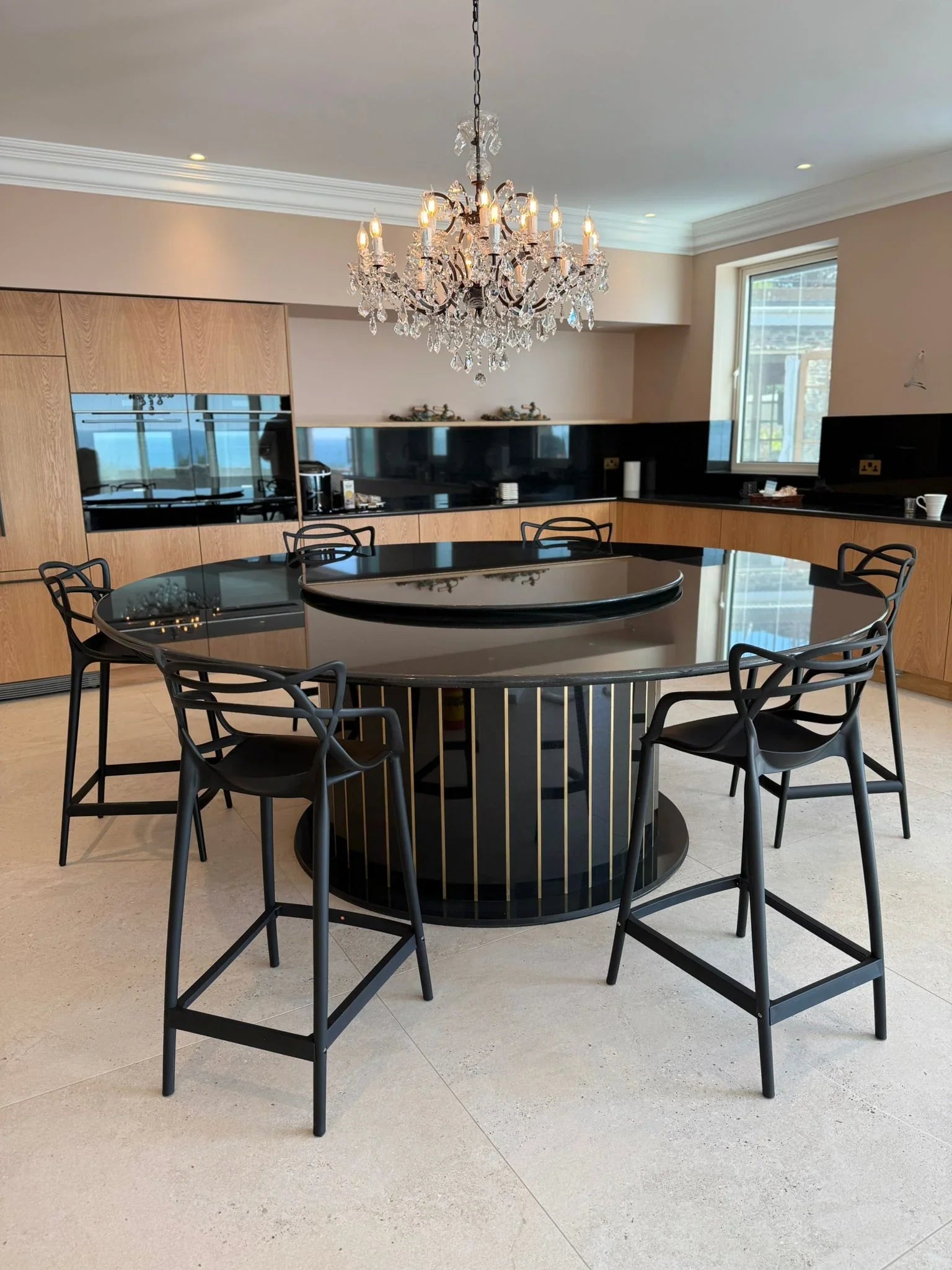
A marble dining table price can vary widely because the cost is not only about the stone. Size, thickness, slab choice, base design, finish, delivery and the amount of handwork all affect the final figure.
The same is true for travertine, granite and bespoke stone tables. A small, simple table in a readily available stone will not cost the same as a large dining table made from carefully selected slabs with a sculptural base and custom dimensions.
This guide explains what drives the cost of a stone dining table, so you can understand what you are paying for before you buy.
The Short Answer
A stone dining table costs more than most mass-produced timber, veneer or metal tables because the material is heavier, harder to handle and slower to work with.
The biggest cost factors are:
- Stone type
- Table size
- Slab quality and availability
- Thickness and edge detail
- Base design
- Finish and sealing
- Handmade labour
- Bespoke changes
- Delivery and installation
A natural stone table should be judged as a long-term piece of furniture, not a quick surface purchase. The cost reflects the material, craft and planning needed to make it properly.
Explore our stone dining tables and travertine dining tables to compare dining pieces across the Virrelli range.
Why Stone Dining Tables Cost More
Stone is not a lightweight material. It has to be sourced, selected, cut, shaped, supported, finished and moved carefully.
A stone dining table also needs proper structure. The base has to support the weight of the top. The proportions need to feel balanced. The edges need to be finished properly. The surface needs to be sealed and prepared for use.
This is very different from furniture made from sheet materials or mass-produced components. With natural stone, the raw material itself is part of the value. The making process then adds the labour, skill and judgment needed to turn that material into a table.
Stone Type Affects the Price
Different stones come at different costs.
Marble is often priced by the rarity, veining, origin and quality of the slab. Some marbles are relatively accessible. Others are much more expensive because of their pattern, colour, demand or availability.
Travertine can be more approachable than some marbles, but the cost still depends on the grade, tone, fill, finish and slab selection. A calm, consistent travertine with good structure is not the same as a poor-quality stone chosen only because it is cheap.
Granite pricing depends on the type, colour, density and finish. Some granites are practical and widely available. Others are more specialist.
The Palatino Marble & Travertine Dining Table shows how material choice can affect both the look and the pricing conversation. Marble and travertine create different results, and each stone needs its own approach.
Size Is One of the Biggest Cost Factors
A larger dining table uses more stone, more labour and more handling.
The difference between a table for four and a table for ten is not only a few extra centimetres. A larger table may need a larger slab, more support, more careful delivery and more planning around access.
Longer tables can also limit which slabs are suitable. Not every piece of stone will work for a large dining table. The right slab needs enough usable area, the right movement and the strength to suit the design.
For help with proportions, read our stone dining table size guide.
Shape and Base Design Matter
The shape of the table affects both appearance and cost.
A simple rectangular table may be more straightforward than a complex sculptural design, but this still depends on the stone, edge and support. Round and oval tables often require more careful shaping, especially when the edge and base need to feel balanced from every angle.
A pedestal dining table can be more complex than a standard four-leg table because the central base must carry the weight properly. It also has to feel stable and proportioned.
The Aventino Round Travertine Pedestal Dining Table is a good example of a design where base, shape and material all work together. The cost is not only in the stone top. It is also in the structure that supports it.
View our pedestal dining tables for this kind of dining form.
Slab Selection and Natural Variation
Every natural stone slab is different.
Some slabs have quieter movement. Some have stronger veining. Some have more pores, bands or mineral variation. Some are better suited to dining tables than others.
A lower-cost slab is not always a saving if the pattern, quality or structure is wrong for the table. The stone needs to be chosen for how it will work as furniture, not just how it looks in isolation.
This is especially important with marble dining tables. A beautiful marble slab can become the main visual feature of the room, but it needs to be selected carefully so the finished table feels balanced.
Thickness, Edges and Finish
The thickness of the stone affects cost, weight and appearance.
A thicker-looking table may feel more substantial, but it can also add weight and handling requirements. A finer edge can feel more refined, but it still needs strength and proper finishing.
Edge detail also matters. A simple softened edge will not require the same work as a more complex profile. The edge is one of the places where craft shows, because it is touched, seen and used every day.
The finish also affects the cost. Honed, polished, filled or sealed surfaces all require different processes. Travertine may need filling. Marble may need careful finishing to show the stone well. The chosen finish should suit the table’s use, not just its appearance.
Handmade Labour
A handmade stone table involves real time.
The table has to be planned, cut, shaped, finished and checked. The base has to be made or prepared. The stone has to be handled safely. The final piece has to feel like furniture, not simply a slab placed on a support.
This labour is part of the value. It is what makes the table usable, proportioned and resolved.
A cheaper table may reduce cost by simplifying the material, reducing labour, using thinner construction, relying on imitation stone or avoiding bespoke work. Those choices may be right for some buyers, but they are not the same as a handmade natural stone table.
Bespoke Stone Dining Table Costs
A bespoke stone dining table will usually cost more than a standard design because more decisions are involved.
Bespoke work may include:
- Custom dimensions
- A different stone
- A different base
- A different edge profile
- A special finish
- Design work around a room
- Access planning
- One-off construction details
The cost depends on how far the design moves from the standard piece. A small size adjustment may be simple. A completely new table design will require more planning and making time.
For made-to-order projects, view our bespoke stone furniture page.
Delivery and Installation
Stone dining tables are heavy, so delivery is part of the cost conversation.
A large stone table may need specialist handling, careful access checks and more than one person to move it safely. Stairs, narrow doorways, tight turns, fragile floors and long routes from parking to the room can all affect the delivery plan.
This is not an area to treat casually. A stone table should arrive safely and be placed correctly. Poor handling can damage the table, the property or both.
Before ordering a large table, think about the route into the room as well as the room itself.
Why Some Stone Tables Are Much Cheaper
Not all “stone tables” are the same.
Some lower-cost tables may use thinner stone, stone veneer, composite surfaces, printed stone-effect materials or imported mass-produced construction. Some may be made with less attention to edge detail, support or finish.
That does not always make them wrong. But it does make them different.
When comparing prices, check what the table is actually made from. Is it solid natural stone? Is it veneer? Is it engineered surface? Is it handmade? Is it made to order? Is the base designed to support the stone properly?
The cheapest option may not be the best comparison if the materials and making process are not the same.
Marble Dining Table Price
A marble dining table price is usually influenced by slab choice more than almost anything else.
Marble with strong veining, rare colour or high demand will usually cost more. Larger tables also require larger usable sections of stone, which can increase the price.
Finish matters too. A marble dining table needs the right surface preparation and sealing. Marble can etch from acidic substances, so the table should be finished and cared for properly.
A marble dining table is often chosen because the stone is meant to be seen. That visual character is part of the price.
Travertine Dining Table Cost
Travertine dining tables are often chosen for warmth, texture and a calmer natural stone look.
The cost depends on the quality of the travertine, the size of the table, the amount of filling, the finish and the base design. A large oval or pedestal travertine table will require more planning than a smaller, simpler design.
The Ravenna Oval Travertine Dining Table shows how shape affects the finished piece. The curved form softens the table, but the size, stone and making process all contribute to the cost.
Explore our oval tables for curved stone dining and occasional pieces.
Is a Stone Dining Table Worth It?
A stone dining table can be worth it if you want a long-term piece with real material presence.
It is not the right choice if you only want the lowest possible price or a surface that can be treated without care. Natural stone needs proper cleaning, sealing where suitable and sensible everyday habits.
It is the right choice if you value weight, craft, natural variation and permanence. A stone table can define a dining room in a way lighter materials often cannot.
The value is not just in how the table looks on delivery. It is in how it holds the room for years.
How to Budget for a Stone Dining Table
Start with the size and shape you actually need. Do not overbuy for rare occasions if the table will dominate the room every day.
Then decide which material suits the space. Marble, travertine and granite each have different costs, care needs and visual character.
Next, consider whether a standard made-to-order design will work, or whether you need bespoke dimensions.
Finally, factor in delivery and access. A stone dining table is not a small parcel. The route into the room matters.
A good budget should include the whole process: material, making, finish, delivery and aftercare.
Questions to Ask Before Buying
Before choosing a stone dining table, ask:
- What stone is the table made from?
- Is it solid natural stone?
- Is it handmade or mass-produced?
- Is it made to order?
- What size do I actually need?
- Is the table sealed?
- What finish does the stone have?
- How is the base constructed?
- Is delivery included?
- Will access be checked?
- Can the table be made bespoke?
- What care does the stone need?
These questions make price comparisons much clearer.
Stone Dining Table Cost FAQs
How much does a stone dining table cost?
The cost depends on the stone, size, slab quality, thickness, base, finish, labour, bespoke requirements and delivery. Natural stone tables vary widely because each material and design has different making requirements.
Why are marble dining tables expensive?
Marble dining tables can be expensive because the stone itself may be costly, especially if the slab has strong veining, rare colour or large usable sections. Cutting, finishing, sealing, base construction and delivery also add to the price.
Is travertine cheaper than marble?
Travertine can sometimes be more affordable than certain marbles, but it depends on the quality, size, finish and table design. A well-made travertine dining table is still a substantial natural stone piece.
What affects the price of a bespoke stone table?
Bespoke stone table pricing is affected by custom size, stone choice, edge detail, base design, finish, design time, making time and delivery requirements.
Is a stone dining table worth the money?
It can be, if you want a long-term dining piece with natural material character, weight and craft. It may not be right if you only want the cheapest possible table or a surface that needs no care.
Are larger stone dining tables much more expensive?
Usually, yes. Larger tables need more stone, more support, more labour and more careful handling. They may also require larger slabs and more detailed delivery planning.
Does delivery affect the cost of a stone dining table?
Yes. Stone tables are heavy and need careful handling. Delivery cost can depend on size, weight, access, stairs, distance and whether specialist placement is required.
Can a Virrelli dining table be made bespoke?
Yes. Bespoke sizing or design changes may be possible depending on the stone, structure and brief. The room, access, seating and intended use should be discussed before the table is made.


