


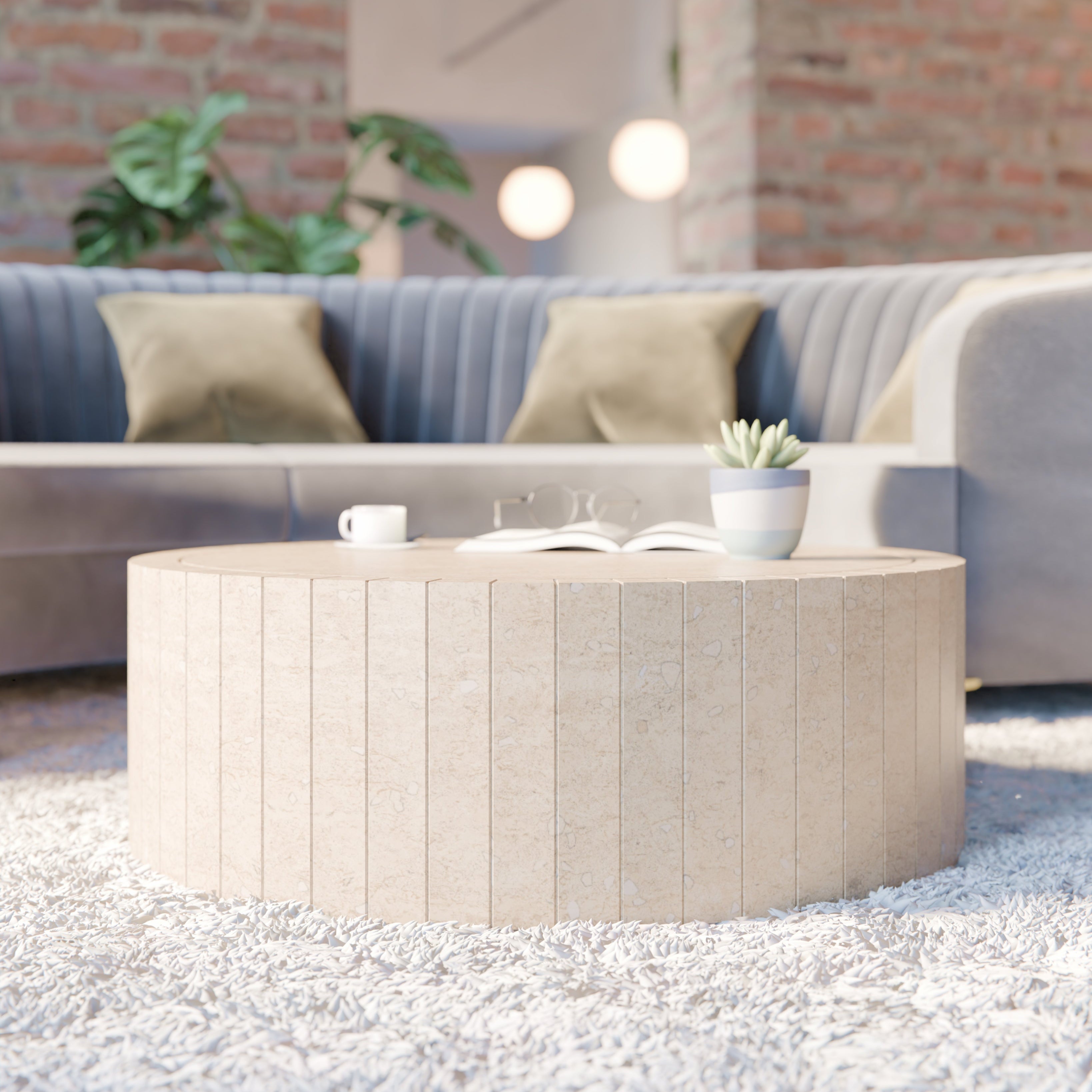
A small round coffee table can make a compact living room feel calmer, softer and better planned. In a flat or smaller room, every piece of furniture has to earn its place. Stone may sound like a large-room material, but used carefully, it can work beautifully in small spaces.
The key is choosing the right scale and shape. A stone coffee table or side table should bring weight without blocking movement. Travertine, marble and granite all have presence, so the design needs to feel useful, compact and properly placed.
Explore our round coffee tables and stone side tables to compare smaller stone pieces for living rooms, flats and compact spaces.
The Short Answer
Stone tables can work well in small spaces when the shape is simple, the footprint is considered and the room has enough movement around the piece.
Choose a round coffee table if you want to soften a compact seating area. Choose a side table if you need a useful surface without taking over the centre of the room.
In smaller homes, the aim is not to fill the space. It is to give the room one or two substantial pieces that make it feel more considered.
Why Stone Works in Small Rooms
Small rooms often suffer when every piece feels lightweight. Too many thin legs, temporary tables and flat surfaces can make the space feel busy rather than calm.
Stone does the opposite. It gives a room a clear point of weight. A travertine coffee table can make a small living room feel more settled. A marble or granite side table can bring substance to a corner without needing much floor space.
Natural stone also brings texture. In a small room, that texture matters because there are fewer surfaces to work with. Pores, veins, mineral detail and tonal variation add depth without adding clutter.
Choose Round Shapes for Easier Movement
Round tables are useful in small spaces because they have no corners.
This makes them easier to move around, especially between a sofa, chair, rug and doorway. A round table can also soften the straight lines found in many flats: walls, windows, kitchen units, shelving and rectangular sofas.
The Aventino Round Travertine Coffee Table is a good example of this idea. The round shape keeps the outline gentle, while the travertine gives the room a grounded centre.
View our round coffee tables for curved stone coffee table designs.
Use Side Tables When Space Is Tight
A side table can be the better choice when there is not enough room for a central coffee table.
Placed beside a sofa, armchair or bed, a stone side table gives you somewhere for a drink, book, lamp or small object without taking over the floor plan.
The Navona Travertine Side Table works well in this role. It is compact, but the stone gives it enough presence to feel intentional rather than like a small filler piece.
Explore our stone side tables and travertine side tables for smaller pieces in natural stone.
Think About Footprint, Not Just Size
A table can be small on paper but awkward in the room.
Footprint matters. A square table may offer useful surface area, but it can feel harder to move around in a tight layout. A round table may take up a similar amount of space, but feel easier because the edges are softer.
Height matters too. A coffee table should usually sit close to the height of the sofa seat, or slightly lower. A side table should relate to the sofa arm, chair arm or bed height, depending on where it is used.
In a small room, a table should feel close enough to use but not so close that it interrupts movement.
Coffee Table or Side Table?
Not every small living room needs both.
Choose a coffee table if the seating area has enough room in the centre and you want a clear anchor between sofa and chairs.
Choose side tables if the room is narrow, if people need to walk through the middle, or if the sofa is close to a wall, fireplace or media unit.
A pair of side tables can sometimes work better than one coffee table. They give useful surfaces where people actually sit, while keeping the centre of the room open.
For broader living room options, browse our stone coffee tables.
How Much Space Should You Leave?
Leave enough space for people to move naturally around the table.
For a coffee table, there should be comfortable clearance between the sofa and the table, and enough room to pass around the outside. In a compact flat, this is more important than choosing the largest surface possible.
For a side table, think about reach. It should sit close enough to be useful from the seat, but not block the arm of the sofa or the route beside it.
A stone table should feel settled, not squeezed in.
Styling Stone Tables in Small Spaces
Keep styling simple. A small stone table does not need many objects.
For a coffee table, use one low bowl, a small stack of books, a tray or a single ceramic piece. Leave part of the stone visible. The material is already doing much of the visual work.
For a side table, a lamp and a coaster may be enough. If the surface is compact, avoid crowding it with candles, vases and accessories.
In small rooms, empty space is part of the styling.
Materials That Work Around Stone
Stone works best in small spaces when it is balanced with softer materials.
Travertine pairs well with linen, oak, wool, plaster, leather and warm neutral walls. Marble works with darker timber, bronze, soft upholstery and simple ceramics. Granite can be softened with pale fabrics, textured rugs and warm lighting.
Avoid making the whole room too hard. Stone, glass, metal and glossy surfaces can feel cold when used together in a compact space.
Use rugs, cushions, curtains, lamps and natural fibres to soften the weight of the table.
Small Flats and Open-Plan Living
In flats, the living room often has to do several jobs. It may be a sitting room, dining area, home office and route to the kitchen all at once.
A stone table can help define the seating area, but it should not block the way the space works.
A round coffee table can mark the centre of a small sofa area. A side table can support an armchair or reading corner. In open-plan rooms, stone can create a material anchor without needing a large footprint.
Think about the path through the room first. Then place the table where it supports the layout.
When to Choose Travertine
Travertine is a strong choice for small spaces because it has warmth and texture without feeling too glossy.
Its soft tones work well in flats and compact rooms where the aim is calm rather than drama. It can sit with pale walls, timber floors, neutral upholstery and warm lighting.
A travertine table also has enough natural character that you do not need to add much decoration. This is useful in smaller rooms, where clutter builds quickly.
When to Choose Marble or Granite
Marble can work well in a small room when you want a more refined surface and visible veining. It is best kept simple, with fewer objects on top so the stone can be seen.
Granite works well where a compact piece needs more weight and contrast. A granite side table can make a small corner feel finished without adding a large item of furniture.
Both materials should be balanced with softness. In a small space, the surrounding textures matter as much as the table itself.
Common Mistakes in Small Spaces
The first mistake is choosing a table that is too large for the route through the room. A beautiful table will become frustrating if people have to step around it every day.
The second mistake is choosing too many small pieces. Several lightweight tables can make a room feel cluttered. One well-chosen stone table may feel calmer.
The third mistake is overstyling. Small surfaces should not be crowded. Let the material show.
The final mistake is ignoring shape. A round table can often solve problems that a square or rectangular table creates in a tight room.
Stone Tables for Small Spaces FAQs
Are stone tables good for small spaces?
Yes. Stone tables can work well in small spaces when the scale, shape and placement are right. A compact stone table can make a room feel more settled and considered.
Is a small round coffee table good for a flat?
Yes. A small round coffee table can suit a flat because it has no sharp corners and allows easier movement around the seating area.
Are round coffee tables better for small rooms?
Often, yes. Round coffee tables soften the layout and are easier to move around than square or rectangular tables in tight spaces.
Should I use a coffee table or side table in a small living room?
Use a coffee table if there is enough space in the centre of the seating area. Use side tables if the room is narrow or if you need to keep the middle of the room open.
Do stone tables make small rooms feel heavy?
They can if they are too large or poorly placed. But a well-proportioned stone table can make a small room feel grounded rather than crowded.
What stone works best in small spaces?
Travertine works especially well because it has warmth, texture and a calmer appearance. Marble and granite can also work if the piece is properly scaled and balanced with softer materials.
How do you style a small stone coffee table?
Keep it simple. Use a tray, a small stack of books, a low bowl or one ceramic object, and leave enough surface visible so the stone can be seen.


