


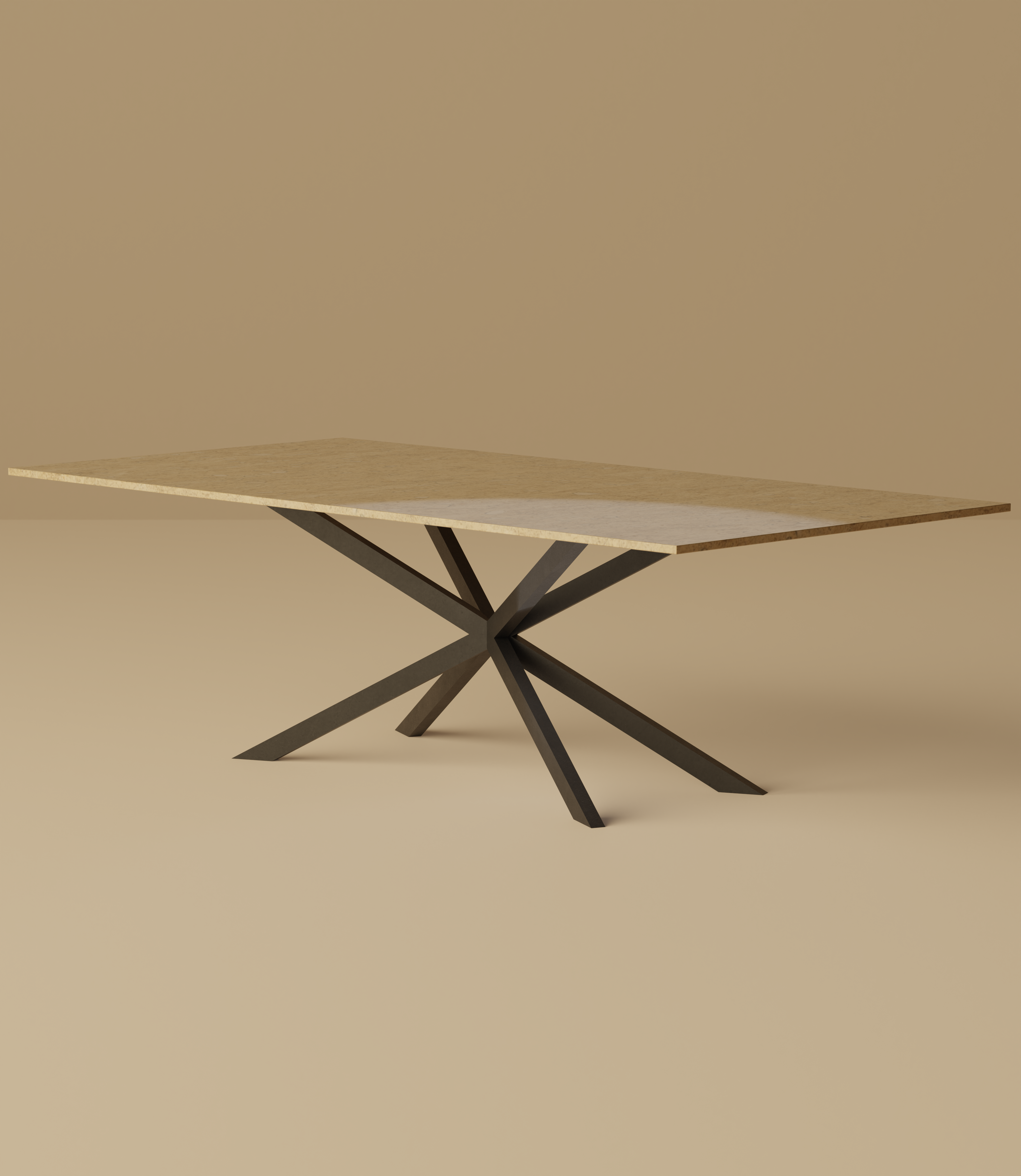
Quartz vs marble is a common comparison when choosing a table top, but travertine deserves to be part of the same conversation. All three can be used for furniture, but they are not the same kind of material.
Quartz, in interiors, usually means an engineered stone surface made with quartz minerals, resin and pigment. Marble and travertine are natural stones, cut from the earth and finished for use. That difference affects how the table looks, feels, wears and sits in a room.
At Virrelli, we focus on natural stone furniture because variation, weight and material character are central to the piece. The table is not trying to imitate stone. It is stone.
The Short Answer
Choose quartz if you want a consistent, engineered surface with a more controlled look and generally simpler maintenance.
Choose marble if you want natural veining, a cooler surface character and a more refined table top.
Choose travertine if you want warmth, visible pores, soft movement and a more architectural natural stone feel.
There is no single best material for every room. Quartz is practical and consistent. Marble is veined and composed. Travertine is warmer, quieter and more textured.
Explore our marble furniture and travertine furniture to compare natural stone pieces across the Virrelli range.
What Is Quartz?
In furniture and interiors, quartz usually refers to engineered quartz rather than a single piece of natural quarried stone.
Engineered quartz is made using quartz minerals combined with resin, pigments and other materials. It is designed to create a hard, consistent surface with controlled colour and pattern.
This can make quartz useful where repeatability matters. If a project needs several matching surfaces, or if the client wants a very uniform look, quartz can be a practical option.
The trade-off is character. Quartz can be attractive, but it does not have the same natural variation, depth or unpredictability as marble or travertine.
What Is Marble?
Marble is a natural stone known for veining, depth and a cooler, more composed surface character.
Each marble slab is different. Some are quiet and pale. Others have stronger veining and more dramatic contrast. This makes marble especially useful when the table top is meant to be a focal point.
A marble table can feel refined without needing heavy decoration. The stone carries enough visual movement on its own.
The Duomo Marble & Wood Coffee Table shows how marble can work alongside timber. The marble brings surface movement, while the wood adds warmth and contrast.
View our marble furniture collection for natural stone pieces in this material.
What Is Travertine?
Travertine is a natural limestone known for warm tones, visible pores and soft movement through the stone.
It usually feels calmer and more architectural than marble. Instead of strong veining, travertine often has bands, tonal shifts and small natural cavities. These details give the stone texture without making it too visually busy.
Travertine works especially well for dining tables, coffee tables and side tables because it has weight, warmth and a grounded feel.
The Ravenna Oval Travertine Dining Table is a good example of travertine used at scale. The oval form softens the table, while the stone gives it presence.
Explore our travertine furniture, including travertine dining tables and travertine coffee tables.
Quartz vs Marble vs Travertine: Key Differences
| Feature | Quartz | Marble | Travertine |
|---|---|---|---|
| Material type | Engineered surface | Natural stone | Natural limestone |
| Appearance | Controlled and consistent | Veined and refined | Warm, porous and textured |
| Variation | Low variation | High natural variation | High natural variation |
| Surface character | Clean and uniform | Cool and composed | Soft and architectural |
| Care level | Usually lower | Moderate to high | Moderate |
| Staining risk | Generally lower | Can stain if not sealed/cared for | Can stain if not sealed/cared for |
| Acid sensitivity | Usually more resistant | Can etch from acid | Can mark from acidic spills |
| Best for | Consistency and practicality | Veining and focal surfaces | Warmth, texture and grounded interiors |
Appearance and Character
The biggest difference is visual character.
Quartz is controlled. It can be made in a consistent colour and pattern, which is useful if you want a clean, predictable surface. Some quartz designs imitate marble or limestone, but the result is still engineered.
Marble is natural and more expressive. Its veining can make a table feel more refined, formal or decorative, depending on the slab. It works well when you want the surface to draw attention.
Travertine is quieter. It has warmth, pores and soft tonal movement. It often suits rooms where the aim is calm material depth rather than strong contrast.
Think of quartz as consistent, marble as veined, and travertine as textured.
Natural Stone vs Engineered Surface
Quartz is often chosen because it is engineered for performance. It can be more consistent, more repeatable and easier to specify across several surfaces.
Marble and travertine are chosen for different reasons. They are natural materials with variation built in. No two slabs are exactly the same. The table top carries the marks of the stone itself, not a manufactured pattern.
For a table, that difference matters. A table is not only a surface. It has edges, thickness, weight, support and presence. Natural stone gives the whole piece a material honesty that engineered surfaces do not always have.
This is why Virrelli focuses on natural stone across the wider stone furniture collection.
Durability Compared
Quartz is often the most forgiving of the three for everyday use. It is engineered to be hard, consistent and resistant to many common marks.
Marble is strong, but more sensitive to acidic substances. Lemon, vinegar, wine, fruit juice and some household cleaners can etch the surface. Etching is different from staining. It creates a dull patch where acid has reacted with the stone.
Travertine is durable when properly finished and sealed, but it is naturally porous. Its pores and surface texture are part of the material. Spills should not be left sitting on the surface.
For natural stone tables, durability depends on more than the material name. The finish, sealing, edge detail, thickness, support and care habits all matter.
Staining, Sealing and Etching
Quartz usually needs less sealing and specialist care than marble or travertine. It is often selected for that reason.
Marble and travertine should usually be sealed when used as furniture. Sealing helps slow down absorption and reduce the risk of staining. It does not make natural stone impossible to mark.
Marble can etch from acidic spills. Travertine can stain if liquids enter the stone, especially oil, wine, coffee, tea or coloured sauces. Both should be cleaned with a pH-neutral cleaner suitable for natural stone.
Good habits are simple:
- Wipe spills promptly
- Use coasters for drinks
- Use placemats for meals
- Use felt pads under decorative objects
- Avoid vinegar, lemon, bleach and abrasive cleaners
- Clean with a soft cloth and stone-safe products
Which Looks Most Natural?
Marble and travertine look most natural because they are natural.
Quartz can be made to look like stone, and some designs are very clean and convincing. But the pattern is still manufactured. It will usually feel more controlled and less varied than a quarried slab.
Marble feels natural through its veining and depth. Travertine feels natural through its pores, bands and warmth.
The best choice depends on what kind of natural character you want. Marble is more polished and expressive. Travertine is more grounded and tactile.
Which Is Best for Dining Tables?
Quartz can make sense for dining tables where easy care and consistency are the main priorities. It may suit busy homes, commercial settings or spaces where a uniform surface is preferred.
Marble works well for dining tables where the stone is intended to be a visual feature. It brings refinement and movement, but it needs sensible care around food, drink and acidic spills.
Travertine is a strong dining table material when you want warmth and presence without the sharper veining of marble. It works especially well in rooms with timber, plaster, linen, wool and soft natural tones.
View our stone dining tables and travertine dining tables for natural stone dining pieces.
Which Is Best for Coffee Tables?
For coffee tables, the decision is often more visual.
Quartz gives a clean and controlled look. It can be practical, but it may not have the same depth or tactile quality as natural stone.
Marble can make a coffee table feel more refined and decorative. It works well where the centre of the living room needs a sharper material focus.
Travertine is often especially strong for coffee tables. It brings warmth, weight and calm texture to the seating area. It can soften the straight lines of sofas, rugs and cabinetry.
Explore our stone coffee tables, including travertine coffee tables.
Which Is Better for Everyday Living?
Quartz is usually the easiest option if low maintenance is the main concern. It is consistent, practical and more forgiving in many everyday settings.
Marble and travertine require more care, but they also offer more natural character. They are not difficult to live with when properly sealed and cleaned, but they should be treated as real materials.
The question is what you want from the table. If you want a surface that asks very little of you, quartz may be suitable. If you want a table with natural variation, weight and character, marble or travertine will usually feel more rewarding.
How to Choose Between Quartz, Marble and Travertine
Start with the room.
Choose quartz if the space is very modern, practical and controlled, or if you want consistency above all else.
Choose marble if the table should feel refined, veined and more visually prominent.
Choose travertine if the room needs warmth, texture and a quieter natural stone presence.
Then think about use. A formal dining room can take a more delicate material than a busy family kitchen. A coffee table used every day needs coasters, trays and sensible styling. A side table may allow more freedom because it has a smaller surface and lighter use.
The best table top should suit both the design of the room and the way the room is lived in.
Why Virrelli Focuses on Natural Stone
Virrelli works with natural stone because the material is central to the furniture.
Travertine, marble and granite have real variation. Their tones, pores, veins and mineral details are not printed or repeated. They belong to the slab itself.
That gives each table its own character. A Virrelli table is made to order in England, using natural stone as the starting point rather than a surface effect.
Quartz has its place, but it is not the focus of the Virrelli range. Our interest is in stone with depth, weight and natural individuality.
Quartz vs Marble vs Travertine FAQs
Is quartz better than marble for tables?
Quartz is usually easier to care for and more consistent than marble. Marble offers natural veining, depth and character. The better choice depends on whether practicality or natural material character matters more.
Is quartz natural stone?
Engineered quartz is not natural stone in the same way as marble or travertine. It is made using quartz minerals, resin, pigments and other materials to create a manufactured surface.
Is marble better than travertine?
Neither is simply better. Marble is usually cooler, smoother and more veined. Travertine is warmer, more textured and more architectural. The right choice depends on the room and the way the table will be used.
Does travertine stain more than quartz?
Travertine is more porous than quartz and can stain if spills are left on the surface. Sealing helps protect it, but spills should still be wiped promptly.
Does marble etch?
Yes. Marble can etch when exposed to acidic substances such as lemon, vinegar, wine, fruit juice or some cleaning products. Sealing helps with staining, but it does not fully prevent etching.
Which table top is easiest to maintain?
Quartz is usually the easiest to maintain. Marble and travertine need more specific care, including stone-safe cleaning products and protection from certain spills.
Which material looks most natural?
Marble and travertine look most natural because they are natural stones. Quartz can imitate stone, but it is an engineered surface with a more controlled appearance.
Is travertine good for a dining table?
Yes. Travertine can work very well for dining tables when properly finished, sealed and cared for. It brings warmth, weight and natural texture to the dining room.


