


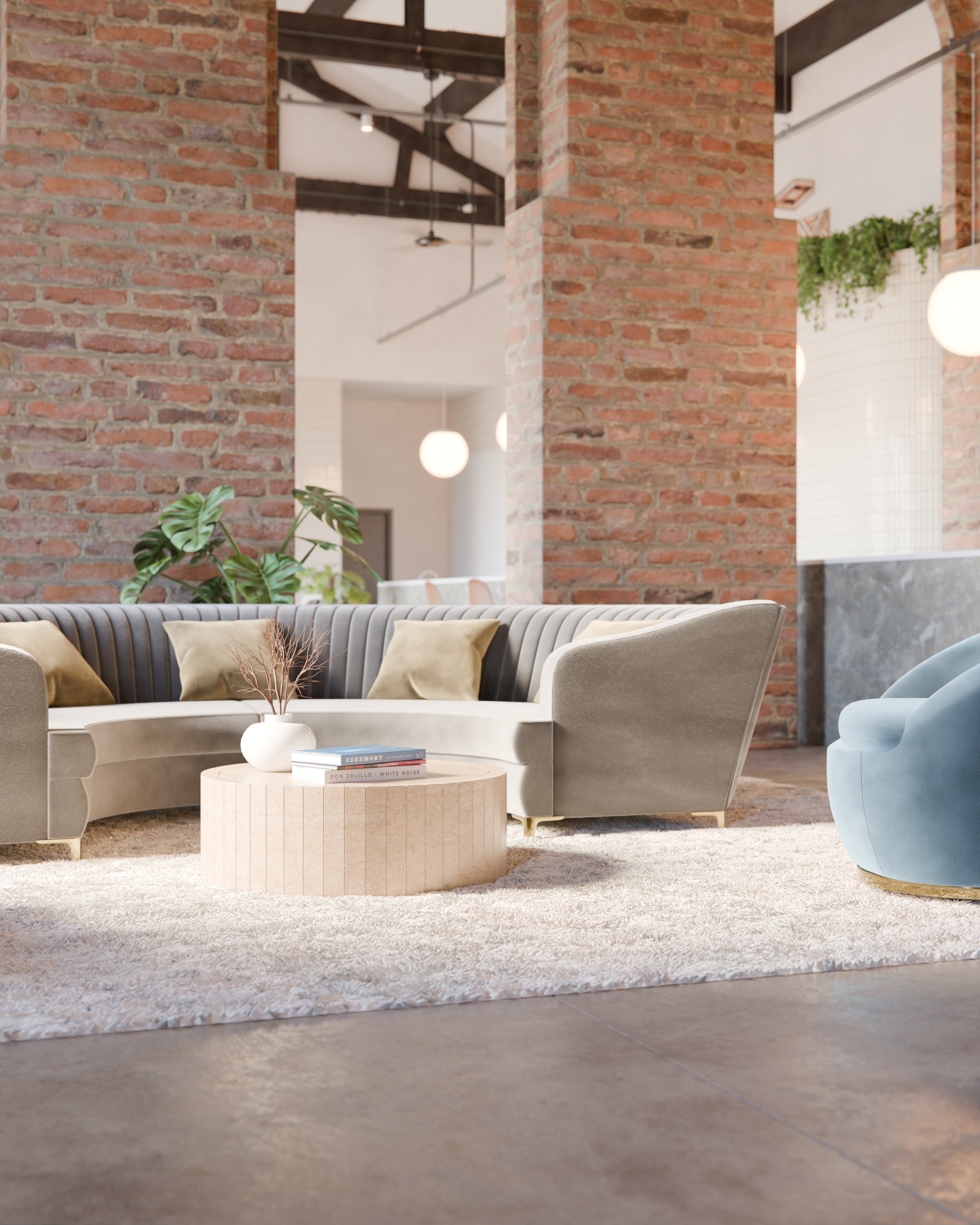
Honed vs polished stone is one of the most important choices when buying a natural stone table. The finish changes how the stone looks, how much light it reflects, how the surface feels, and how easily everyday marks may show.
A honed finish is smooth and low-sheen. A polished finish is glossier and more reflective. Neither is automatically better. The right choice depends on the stone, the room and how the table will be used.
For more stone terms, read our stone furniture glossary, or explore the wider stone furniture collection.
The Short Answer
Choose honed stone if you want a softer, calmer surface with less shine. It usually feels more natural and understated, especially on travertine, marble and some granites.
Choose polished stone if you want more reflection, stronger colour and a surface that shows veining with more contrast. It can feel more formal, but it may also show scratches, etching or dull patches more clearly.
For furniture, honed finishes are often easier to live with visually. Polished finishes can be beautiful, but they need the right room and the right care.
What Is a Honed Finish?
A honed finish is smooth, flat and low-sheen. It is not rough, but it does not have the mirror-like reflection of polished stone.
On a table, honed stone usually feels quiet and tactile. It softens the surface and lets the material feel more natural. This can work especially well in living rooms and dining rooms where the table needs presence without looking too glossy.
Honed travertine keeps the warmth and texture of the stone. Honed marble can make veining feel softer and less formal. Honed granite can reduce glare and give the stone a more architectural character.
This finish suits many stone dining tables, stone coffee tables and stone side tables.
What Is a Polished Finish?
A polished finish is smoother, shinier and more reflective. It brings out colour, depth and veining more strongly than a honed finish.
On marble, polishing can make the veining appear sharper and more dramatic. On granite, it can bring out mineral detail and depth. On travertine, it can create a more formal surface, although many people prefer travertine with a softer, honed feel.
A polished table can look refined, but it is less forgiving visually. Scratches, etching, dull patches, dust and fingerprints may be more noticeable because the surface reflects more light.
Polished stone can work well in the right setting, but it should be chosen deliberately rather than by default.
Honed vs Polished: Key Differences
| Feature | Honed stone | Polished stone |
|---|---|---|
| Surface look | Matt or low-sheen | Glossy and reflective |
| Feel | Smooth, soft, natural | Smooth, crisp, more formal |
| Light reflection | Lower reflection | Higher reflection |
| Veining | Softer, quieter | Sharper, more pronounced |
| Everyday marks | Often more visually forgiving | Can show dull marks more clearly |
| Best suited to | Calm interiors, tactile furniture | Formal rooms, statement surfaces |
| Common use | Dining, coffee and side tables | Feature pieces and more decorative surfaces |
| Care level | Still needs stone-safe care | Needs careful cleaning and protection |
How the Finish Changes the Stone
The same stone can feel very different depending on the finish.
A honed marble table may feel calm, chalky and composed. A polished marble table may feel sharper, brighter and more decorative.
A honed travertine table often feels warm and architectural. The pores, bands and tonal movement remain visible, but the surface does not shout for attention. This is one reason travertine furniture often suits relaxed, natural interiors.
A polished granite table can feel deep and reflective, especially with darker stones. A honed granite finish can make the same material feel more restrained and less glossy.
The finish is not only a technical choice. It changes the mood of the furniture.
Which Finish Is Best for Travertine?
Travertine usually suits a honed or softer finish. The stone has natural pores, bands and warm tonal variation, so a low-sheen surface often feels most honest to the material.
A highly polished travertine can look more formal, but it may lose some of the quiet texture that makes the stone appealing for furniture.
For travertine furniture, a honed finish can help the piece feel grounded and natural. It works well across travertine dining tables, travertine coffee tables and travertine side tables.
The Aventino Round Travertine Coffee Table is a good example of why a softer finish can suit the material. The shape and stone do enough on their own. The surface does not need heavy shine.
Which Finish Is Best for Marble?
Marble can work well in both honed and polished finishes, but the effect is different.
Honed marble feels softer and more contemporary. It reduces glare and gives the veining a quieter appearance. It can suit dining rooms, coffee tables and interiors where the marble should feel refined but not too formal.
Polished marble makes the veining stronger and the surface more reflective. This can create a more decorative look, especially in rooms with good lighting and more formal materials.
The trade-off is care. Marble can etch when exposed to acidic substances such as lemon, vinegar, wine and some cleaning products. Etching is often more visible on polished marble because it disrupts the shine.
For marble pieces such as the Palatino Marble & Travertine Dining Table, the finish should be chosen around both the stone and the way the table will be used.
Explore our marble furniture collection for natural stone pieces in this material.
Which Finish Is Best for Granite?
Granite is dense, hard and mineral in character. It can take a polished finish well, especially where the aim is to bring out depth and contrast.
A polished granite surface can look strong and architectural. It may suit darker stones, side tables and pieces where the mineral pattern is part of the design.
A honed granite finish is quieter. It reduces reflection and can make the stone feel more natural, especially in rooms with softer materials or less formal styling.
For granite furniture, the choice depends on whether the piece should feel bold and reflective or more restrained and grounded.
Which Finish Is Better for Dining Tables?
For dining tables, honed stone is often the more liveable choice. It has less glare, feels softer under everyday light and can be more forgiving visually.
That matters because a dining table is used for food, drink, plates, glasses, serving dishes and cleaning. The surface needs to look good when empty, but it also needs to handle daily use.
A polished dining table can work, but it needs more careful habits. Dull marks, scratches and etching may be more visible, especially on marble.
If the dining room is relaxed, natural or family-focused, honed stone will often suit the space better. If the room is formal and carefully used, polished stone may be appropriate.
View our stone dining tables and pedestal dining tables for dining pieces where shape, base and finish all need to work together.
Which Finish Is Better for Coffee Tables?
Coffee tables are exposed to drinks, books, candles, trays and decorative objects. For that reason, a honed finish is often a practical and visual fit.
A honed coffee table feels calm in the centre of a living room. It lets the stone show without becoming too reflective. It also works well with rugs, sofas, timber, linen and soft lighting.
A polished coffee table can bring more drama, especially in marble or granite, but it may show rings, dust and dull marks more readily.
For living room pieces, view our stone coffee tables, round coffee tables and square coffee tables.
Which Finish Is Better for Side Tables?
Side tables can take either finish, depending on their role in the room.
A honed side table feels quieter and more tactile. It works well beside a sofa, armchair or bed, especially when the piece is part of a calm interior scheme.
A polished side table can work where the table is more decorative, such as in a hallway, entrance space or formal sitting room.
Because side tables are smaller, a stronger finish may be easier to use without overwhelming the room. Still, the surface should be protected from lamps, drinks, vases and objects with rough bases.
Explore stone side tables and travertine side tables for compact natural stone pieces.
Does Honed Stone Stain More Easily?
Honed stone can sometimes be more open at the surface than polished stone, depending on the material and finish. That means sealing and care still matter.
A honed surface may be less reflective, but it is not maintenance-free. Spills should still be wiped promptly, especially oil, wine, coffee, tea and strongly coloured liquids.
The advantage of honed stone is visual softness. It may not show certain marks as sharply as polished stone, because there is no high-gloss reflection to interrupt.
The surface still needs proper sealing, gentle cleaning and sensible use.
Does Polished Stone Scratch or Etch?
Polished stone can scratch, and marble can etch. The issue is often visibility.
Because polished stone reflects light, any dull patch, scratch or acid mark can stand out more clearly. This is especially true with polished marble.
Etching is caused by acidic substances reacting with the stone. Lemon, vinegar, wine, fruit juice and some household cleaners can all cause problems on marble. Sealing helps protect against staining, but it does not fully prevent etching.
Granite is generally less sensitive to acid than marble, but it should still be cleaned with stone-safe products.
How to Care for Honed and Polished Stone
The same basic care rules apply to both finishes.
Use a soft cloth, warm water and a pH-neutral cleaner made for natural stone. Dry the surface after cleaning. Wipe spills quickly rather than leaving them to sit.
Avoid:
- Vinegar
- Lemon
- Bleach
- Limescale remover
- Abrasive pads
- Harsh kitchen sprays
- Bathroom cleaners
- Rough objects dragged across the surface
Use coasters, placemats, trays and felt pads where sensible. This is especially important for dining tables and coffee tables.
Natural stone should be used, but it should not be treated like a synthetic surface.
How to Choose Between Honed and Polished
Choose honed stone if you want the table to feel natural, calm and easy to place in a room. It is often the better choice for relaxed interiors, travertine furniture, everyday dining and living room coffee tables.
Choose polished stone if you want a stronger shine, deeper colour and a more formal surface. It can work well for statement pieces, certain marbles and granites, and rooms where reflection is part of the design.
The best finish is the one that suits the stone and the way the table will be used. A finish should support the material, not fight it.
Honed vs Polished Stone FAQs
What does honed stone mean?
Honed stone has a smooth, low-sheen finish. It is not rough, but it is less reflective than polished stone. It often feels softer and more natural.
What does polished stone mean?
Polished stone has a glossy, reflective finish. It usually makes colour and veining appear stronger, but it can also make scratches or dull marks more visible.
Is honed stone better than polished stone?
Not always. Honed stone is often better for calm, practical furniture. Polished stone is better where you want more shine, reflection and visual contrast.
Is honed marble easier to live with?
Honed marble can be easier to live with visually because it does not rely on high shine. It can still stain or etch, so it still needs sealing and proper care.
Does polished marble etch?
Yes. Polished marble can etch when exposed to acidic substances such as lemon, vinegar, wine or some cleaning products. Etching may be more visible because it dulls the polished surface.
Is travertine usually honed or polished?
Travertine is often suited to a honed or softer finish because the stone has natural pores, warmth and texture. A honed finish helps preserve that character.
Can granite be honed?
Yes. Granite can be honed for a lower-sheen finish. It can also be polished for more reflection and depth. The right choice depends on the stone and the intended look.
Do honed and polished tables both need sealing?
Many natural stone tables should be sealed, whether honed or polished. The correct seal depends on the stone, finish and use.


